
Sessantina Grossa
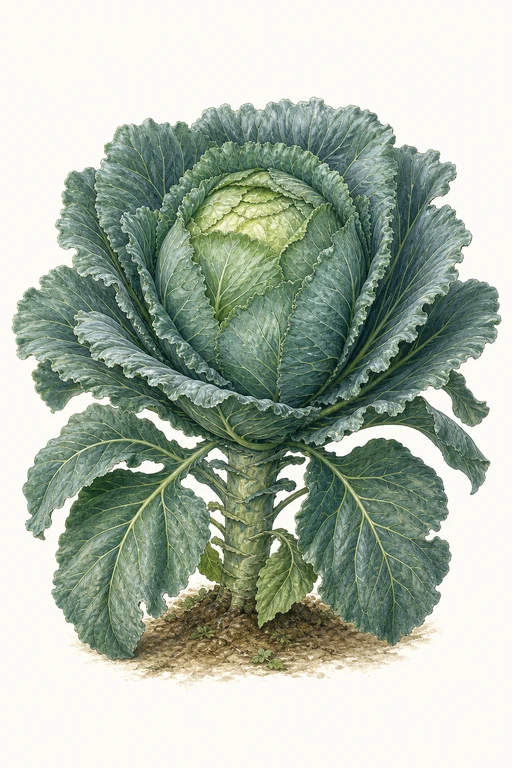
Crisp, cool-sweet leaves unfurl to form a dense, generous head with a satisfying crunch at first bite—Sessantina Grossa is all about that satisfying, garden-fresh snap.
The outer foliage is richly blue-green, while the interior gathers into a pale, creamy heart that stays tender and uniform. Ideal for fresh salads, slaws, and quick sautés, this 55-day cabbage shines whenever you want a bold cabbage flavor with a clean, crisp texture.
Light: Full SunMaturity: 55 DaysHabit: Rosette
Crop Dates : 7a
| Milestone | Date |
|---|---|
| Start Indoors | Mar 23rd |
| Last Frost | Apr 20th |
| Transplant / Sow Outdoors | Apr 20th |
| Harvest Begins | Jun 14th |
| Harvest Ends | Oct 20th |
Crop Details
| Trait | Value |
|---|---|
| Days to Maturity | 55 |
| Sun Requirements | Full Sun |
| Growth Habit | Rosette |
| Support Needed | None |
| Planting Depth | Normal |
| Germination Temp (°F) | 45 |
| Min Soil Temp (°F) | 40 |
| Min Night Temp (°F) | 32 |
| Harden Off (days) | 6 |
Culinary Notes

Chef's Note
Sessantina Grossa is built for that first bite crunch—blue-green outer leaves give you a crisp, brassy snap while the pale heart stays tender and even. Use it either raw under acid to keep it tight, or in a fast hot pan so it turns crisp-tender instead of collapsing into cabbage water.

Best Uses
- shaved slaw with a lemony vinaigrette (stays snappy, doesn’t weep fast)
- hot-quick sauté or stir-fry to keep the edges crisp-tender
- raw salads where you want uniform shreds and a creamy-core sweetness
- braise only briefly when you need body—then stop before it goes soft

Flavor Profile

Frequently Asked Questions
What pest or disease is most common on Brassica oleracea var. capitata (cabbage) and how can I control it?
How often should I water during the main growing phase to grow firm heads of Brassica oleracea var. capitata?
How do I tell when Sessantina Grossa cabbage (Brassica oleracea var. capitata) is ready to harvest?
Sowing Tips

Transplant Conditions
Wait until soil reaches 40°F and nights stay above 32°F before moving outdoors. Harden off for 6 days first.
Expert Note

For the best peppery-sweet flavor, grow rapini in cool weather and avoid hot spells by aiming to transplant just before the mild-warm window after your last spring frost.