
Silver Queen Thyme
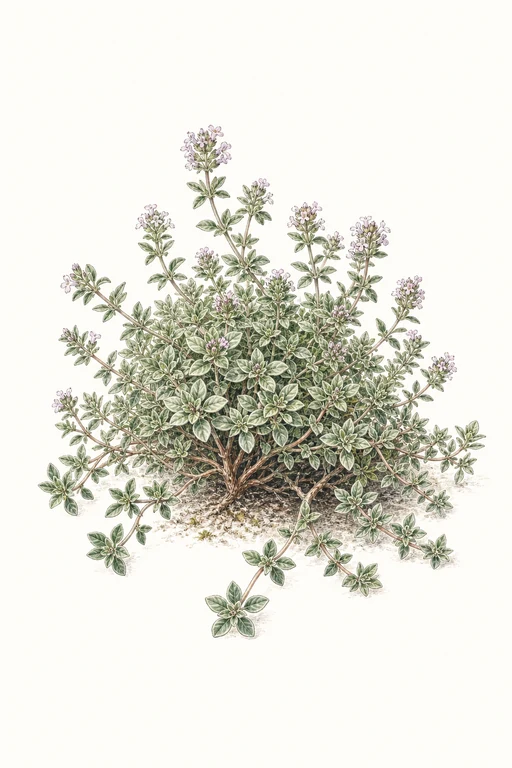
Fragrant, silvery foliage drifts with a cool, herbal perfume—Silver Queen Thyme forms a dense, low cushion of leaves that feel finely textured and richly aromatic at every touch.
The flavor is bright and savory with a gentle, mint-kissed lift, ideal for fresh sprigs and dried bundles alike. Grow it for its ornamental silver cast as well as its dependable culinary presence in roasts, sauces, and quick infusions.
Light: Full SunMaturity: 60 DaysHabit: Upright
Location not set yet
Location not set yet
Enter your ZIP for local crop dates
Silver Queen Thyme Planting Dates by USDA Zone
Estimated US hardiness-zone windows for sow, transplant, and harvest. Enter a US ZIP above for exact local dates, or open a zone below.
| Zone | Start Indoors | Sow / Transplant | Harvest |
|---|---|---|---|
| Zone 1a | May 18th | Jul 27th | Sep 25th – Jul 15th |
| Zone 1b | May 4th | Jul 13th | Sep 11th – Aug 1st |
| Zone 2a | Apr 27th | Jul 6th | Sep 4th – Aug 29th |
| Zone 2b | Apr 17th | Jun 26th | Aug 25th – Aug 25th |
| Zone 3a | Apr 17th | Jun 26th | Aug 25th – Sep 1st |
| Zone 3b | Apr 21st | Jun 30th | Aug 29th – Sep 21st |
| Zone 4a | Apr 17th | Jun 26th | Aug 25th – Sep 24th |
| Zone 4b | Apr 15th | Jun 24th | Aug 23rd – Sep 27th |
| Zone 5a | Apr 10th | Jun 19th | Aug 18th – Sep 30th |
| Zone 5b | Apr 6th | Jun 15th | Aug 14th – Oct 5th |
| Zone 6a | Apr 3rd | Jun 12th | Aug 11th – Oct 10th |
| Zone 6b | Mar 28th | Jun 6th | Aug 5th – Oct 16th |
| Zone 7a | Mar 23rd | Jun 1st | Jul 31st – Oct 20th |
| Zone 7b | Mar 13th | May 22nd | Jul 21st – Oct 28th |
| Zone 8a | Mar 4th | May 13th | Jul 12th – Nov 5th |
| Zone 8b | Feb 23rd | May 4th | Jul 3rd – Nov 12th |
| Zone 9a | Feb 6th | Apr 17th | Jun 16th – Nov 26th |
| Zone 9b | Jan 12th | Mar 23rd | May 22nd – Dec 9th |
| Zone 10a | — | Oct 1st | Nov 30th – Feb 28th |
| Zone 10b | — | Oct 1st | Nov 30th – Feb 28th |
| Zone 11a | — | Oct 1st | Nov 30th – Feb 28th |
| Zone 11b | — | Oct 1st | Nov 30th – Feb 28th |
| Zone 12a | — | Oct 1st | Nov 30th – Feb 28th |
| Zone 12b | — | Oct 1st | Nov 30th – Feb 28th |
| Zone 13a | — | Oct 1st | Nov 30th – Feb 28th |
| Zone 13b | — | Oct 1st | Nov 30th – Feb 28th |
Crop Details
| Trait | Value |
|---|---|
| Days to Maturity | 60 |
| Sun Requirements | Full Sun |
| Growth Habit | Upright |
| Support Needed | None |
| Planting Depth | Normal |
| Germination Temp (°F) | 70 |
| Min Soil Temp (°F) | 60 |
| Min Night Temp (°F) | 50 |
| Harden Off (days) | 10 |
Culinary Notes

Chef's Note
Silver Queen thyme’s silvery, dense foliage gives a sharper, cooler herbal perfume than many common types, so it comes through cleanly even when you only steep it briefly. Use it early in cooking for savory backbone, then finish with a light hand so that mint-kissed lift doesn’t get buried by heavier flavors.

Best Uses
- quick infusions for soups and braises (steep then remove)
- drying and rubbing into roast herb blends
- fast sautéing of mushrooms/greens where thyme needs to stay crisp-austere
- finishing compound butter or oil for lamb and chicken

Flavor Profile

Frequently Asked Questions
What pest or disease problem commonly affects Thymus vulgaris (English thyme), and what’s the best home fix?
How often should I water Silver Queen thyme during peak growth, and what soil moisture level should I aim for?
When is Silver Queen thyme ready to harvest, and what signs should I look for?
Sowing Tips

Transplant Conditions
Wait until soil reaches 60°F and nights stay above 50°F before moving outdoors. Harden off for 10 days first.
Expert Note

Start thyme in light, well-drained seed-start mix and transplant only after nights are reliably warm to keep seedlings from stalling.