
Sonata
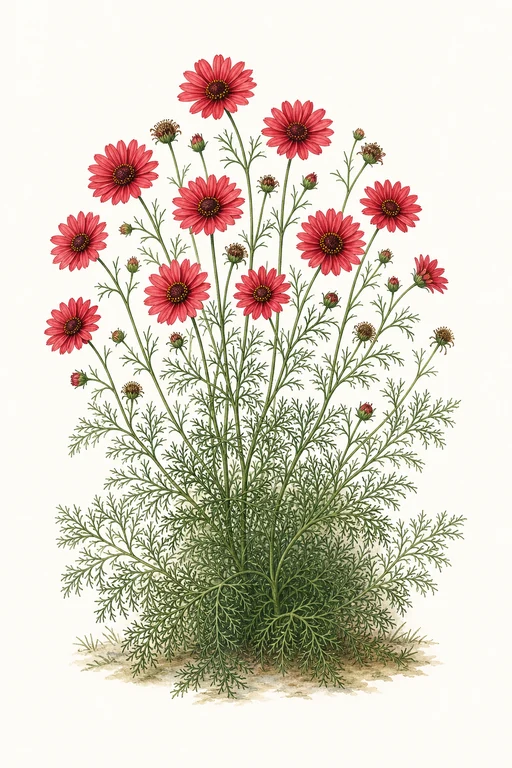
Feathery, fernlike foliage frames a profusion of daisy-like blooms that open with a luminous, silk-satin glow—Sonata’s petals catch the light in a way that feels almost musical.
Expect sturdy, well-branched stems and long-lasting flowers with crisp, clean color and a satisfying, airy texture that holds its shape beautifully. Grow Sonata for standout cut-flower bouquets and for a garden display that stays bright from early bloom through the season’s peak.
Light: Full SunMaturity: 60 DaysHabit: Upright
Location not set yet
Location not set yet
Enter your ZIP for local crop dates
Sonata Planting Dates by USDA Zone
Estimated US hardiness-zone windows for sow, transplant, and harvest. Enter a US ZIP above for exact local dates, or open a zone below.
| Zone | Start Indoors | Sow / Transplant | Harvest |
|---|---|---|---|
| Zone 1a | Protected Environment Only | ||
| Zone 1b | May 11th | Jun 1st | Jul 31st – Aug 1st |
| Zone 2a | May 4th | May 25th | Jul 24th – Aug 29th |
| Zone 2b | Apr 24th | May 15th | Jul 14th – Aug 25th |
| Zone 3a | Apr 24th | May 15th | Jul 14th – Sep 1st |
| Zone 3b | Apr 28th | May 19th | Jul 18th – Sep 21st |
| Zone 4a | Apr 24th | May 15th | Jul 14th – Sep 24th |
| Zone 4b | Apr 22nd | May 13th | Jul 12th – Sep 27th |
| Zone 5a | Apr 17th | May 8th | Jul 7th – Sep 30th |
| Zone 5b | Apr 13th | May 4th | Jul 3rd – Oct 5th |
| Zone 6a | Apr 10th | May 1st | Jun 30th – Oct 10th |
| Zone 6b | Apr 4th | Apr 25th | Jun 24th – Oct 16th |
| Zone 7a | Mar 30th | Apr 20th | Jun 19th – Oct 20th |
| Zone 7b | Mar 20th | Apr 10th | Jun 9th – Oct 28th |
| Zone 8a | Mar 11th | Apr 1st | May 31st – Nov 5th |
| Zone 8b | Mar 2nd | Mar 23rd | May 22nd – Nov 12th |
| Zone 9a | Feb 13th | Mar 6th | May 5th – Nov 26th |
| Zone 9b | Jan 19th | Feb 9th | Apr 10th – Dec 9th |
| Zone 10a | — | Oct 1st | Nov 30th – Feb 28th |
| Zone 10b | — | Oct 1st | Nov 30th – Feb 28th |
| Zone 11a | — | Oct 1st | Nov 30th – Feb 28th |
| Zone 11b | — | Oct 1st | Nov 30th – Feb 28th |
| Zone 12a | — | Oct 1st | Nov 30th – Feb 28th |
| Zone 12b | — | Oct 1st | Nov 30th – Feb 28th |
| Zone 13a | — | Oct 1st | Nov 30th – Feb 28th |
| Zone 13b | — | Oct 1st | Nov 30th – Feb 28th |
Crop Details
| Trait | Value |
|---|---|
| Days to Maturity | 60 |
| Sun Requirements | Full Sun |
| Growth Habit | Upright |
| Support Needed | None |
| Planting Depth | Surface |
| Germination Temp (°F) | 70 |
| Min Soil Temp (°F) | 50 |
| Min Night Temp (°F) | 45 |
| Harden Off (days) | 5 |
Culinary Notes

Chef's Note
Ornamental cosmos cut flower; despite is_edible=true in the payload, no edible-flavor guidance is provided here—treat it as non-consumption unless you have confirmed, specific edible-petal/edible-flower usage for this exact variety.

Flavor Profile
Frequently Asked Questions
What pest or disease most commonly affects Cosmos bipinnatus, and how can I stop it?
How often should I water Cosmos bipinnatus during its main growth phase?
How do I tell when Cosmos bipinnatus (Sonata) is ready to harvest for cut flowers or seed?
Sowing Tips

Transplant Conditions
Wait until soil reaches 50°F and nights stay above 45°F before moving outdoors. Harden off for 5 days first.
Expert Note

For cosmos ‘Sonata’ in small spaces, sow/plant after frost when nights are reliably mild and pinch lightly once for extra branching if starts are lanky.