
Summer
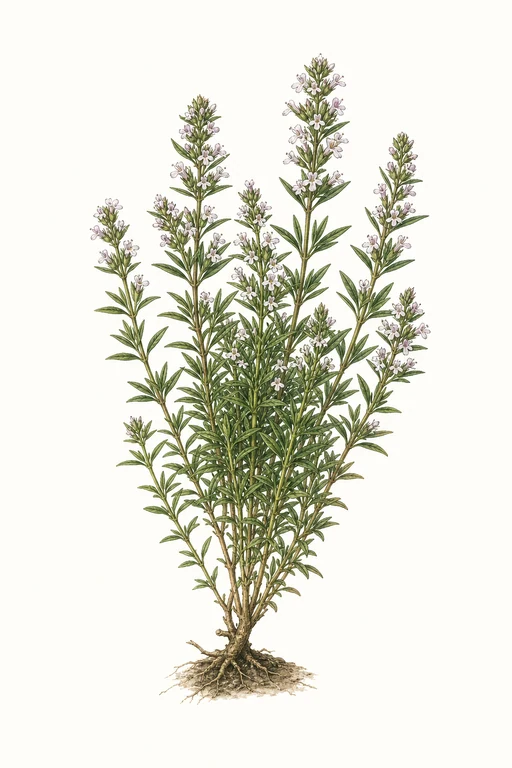
Fragrant and bright from first leaf, Summer Savory fills the garden with a lively, minty-herb perfume and a distinctly savory, peppery warmth.
Its tender, narrow leaves hold a crisp, lightly succulent texture that stays aromatic when gathered at peak growth. Grow Summer Savory for fresh snipping over salads and vegetables, and for drying or simmering into herb-forward sauces, marinades, and pickling blends.
Light: Full SunMaturity: 50 DaysHabit: Upright
Planting schedules and alerts are optimized for Columbus (Zone 6b).
Crop Dates
| Milestone | Date |
|---|---|
| Start Indoors | Apr 4th |
| Last Frost | Apr 25th |
| Transplant / Sow Outdoors | Jun 13th |
| Harvest Begins | Aug 2nd |
| Harvest Ends | Oct 16th |
Crop Details
| Trait | Value |
|---|---|
| Days to Maturity | 50 |
| Sun Requirements | Full Sun |
| Growth Habit | Upright |
| Support Needed | None |
| Planting Depth | Normal |
| Germination Temp (°F) | 70 |
| Min Soil Temp (°F) | 65 |
| Min Night Temp (°F) | 50 |
| Harden Off (days) | 7 |
Culinary Notes

Chef's Note
Summer Savory hits like a peppery, aromatic snap—use it late so its minty lift doesn’t fade into the background. Its narrow, tender leaves practically beg for quick heat or brief infusions, where you get fragrance plus that clean, savory warmth.

Best Uses
- fresh snipping into warm beanless sautés, roasted veg, and simple oil-and-vinegar dressings
- simmered into pan sauces and herb-forward marinades for quick infusion
- dried and rubbed into pickling blends and salt cures for a sharp, aromatic edge
- finishing shower over grilled meats and mushrooms right off the heat

Flavor Profile

Frequently Asked Questions
What pest or disease most commonly affects summer savory (Satureja hortensis), and what should I do?
How often should I water summer savory during the main growing period?
How can I tell when summer savory is ready to harvest?
Sowing Tips

Transplant Conditions
Wait until soil reaches 65°F and nights stay above 50°F before moving outdoors. Harden off for 7 days first.
Expert Note

Start annual savory indoors only briefly, then harden well so plants establish quickly in warm weather for best flavor.