
Sunset
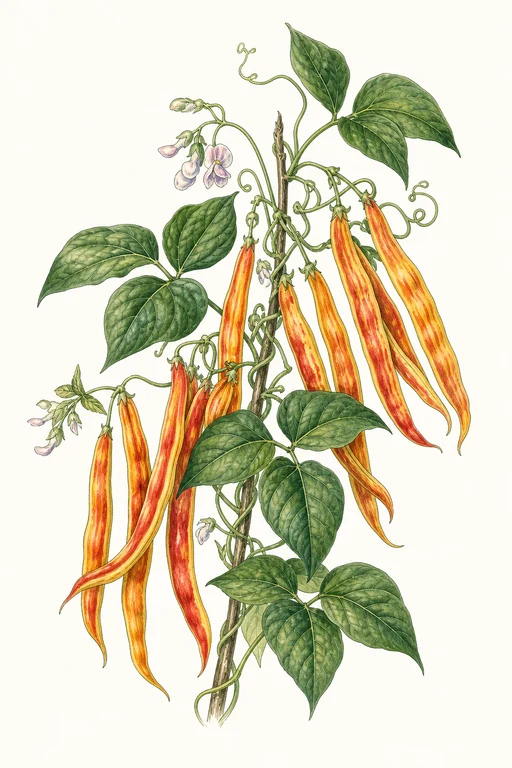
Sunset pole beans arrive with a vivid, sunset-striped allure—tender pods that glow in warm bands of golden-orange and soft scarlet.
Their flavor is sweet and distinctly bean-forward, with a crisp, succulent snap that stays pleasantly fine even as the pods mature. Grow for abundant harvests and enjoy them at their best for fresh use, quick sauté-style meals, and vibrant pickling where their color really shines.
Light: Full SunMaturity: 70 DaysHabit: Climbing
Planting schedules and alerts are optimized for Columbus (Zone 6b).
Crop Dates
| Milestone | Date |
|---|---|
| Start Indoors | Direct Sow |
| Last Frost | Apr 25th |
| Transplant / Sow Outdoors | Apr 25th |
| Harvest Begins | Jul 4th |
| Harvest Ends | Oct 16th |
Crop Details
| Trait | Value |
|---|---|
| Days to Maturity | 70 |
| Sun Requirements | Full Sun |
| Growth Habit | Climbing |
| Support Needed | Trellis |
| Planting Depth | Normal |
| Germination Temp (°F) | 70 |
| Min Soil Temp (°F) | 60 |
| Min Night Temp (°F) | 45 |
| Harden Off (days) | Not Required |
Culinary Notes

Chef's Note
With a crisp, finely snapping pod and a sweeter, more overt bean flavor than many green types, this is a bean built for speed—hit it hard and fast, then stop cooking before it turns waxy. Its sweet freshness loves lemon and browned butter, and the colors make it especially worth the vinegar bucket for quick pickling.

Best Uses
- quick high-heat sautés with garlic and butter for maximum crunch
- steamed and dressed—pods should stay snappy, not soggy
- vibrant quick pickles to show off the golden-orange and scarlet bands
- tossing into warm grain bowls at the last minute so they retain that fine snap

Flavor Profile

Frequently Asked Questions
What pest or disease commonly affects Phaseolus coccineus (runner bean), and how can I control it?
How often should I water runner beans (Phaseolus coccineus) during the main growing phase?
How can I tell when my runner bean pods are ready to harvest?
Sowing Tips

Transplant Conditions
Wait until soil reaches 60°F and nights stay above 45°F before moving outdoors.
Expert Note

For the best yield, wait until soil is warm and sow directly, keeping soil evenly moist until emergence.