
Thymus Serpyllum
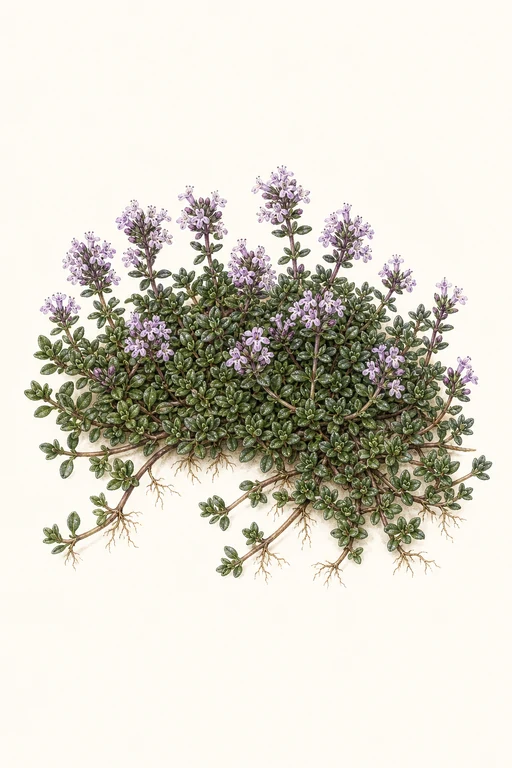
Creeping Thyme blankets the ground with a fragrant, resinous perfume—tiny leaves release a bright, herbal snap when you brush past.
At maturity, it forms a dense, low mat of velvety foliage with a fine, wiry texture and a subtly peppery, thyme-forward character that makes it a standout for aromatic garden use. Grow it for its enduring, medicinal-leaning presence and its ability to soften pathways and edges with living fragrance year after year.
Light: Full SunMaturity: 730 DaysHabit: Spreading
Planting schedules and alerts are optimized for Columbus (Zone 6b).
Crop Dates
| Milestone | Date |
|---|---|
| Last Frost | Apr 25th |
| Growing Approach | Protected Environment Only |
Crop Details
| Trait | Value |
|---|---|
| Days to Maturity | 730 |
| Sun Requirements | Full Sun |
| Growth Habit | Spreading |
| Support Needed | None |
| Planting Depth | Surface |
| Germination Temp (°F) | 70 |
| Min Soil Temp (°F) | 50 |
| Min Night Temp (°F) | 35 |
| Harden Off (days) | 7 |
Culinary Notes

Chef's Note
Creeping thyme hits with a resin-bright top note and a peppery little snap, so it rewards last-second heat and quick chopping for a clean, fragrant chew. Use it like a flavor “sprinkler” over warm proteins and fats—oil, butter, honey—so the aroma blooms instead of going flat.

Best Uses
- quick-chop into pan sauces and reductions right at the end so it stays vivid
- dry-rub or fresh-friction over roasted lamb or chicken for a perfumed crust
- infuse into honey, simple syrup, or vinegar for a sharp, fragrant drizzle
- fold into compound butter for melt-in flavor on hot bread or grilled fish

Flavor Profile

Frequently Asked Questions
What pest or disease commonly affects Thymus serpyllum (English thyme), and how can I stop it?
How often should I water Thymus serpyllum during the main growing season, and what soil moisture level is ideal?
How can I tell when Thymus serpyllum is ready to harvest?
Sowing Tips

Transplant Conditions
Wait until soil reaches 50°F and nights stay above 35°F before moving outdoors. Harden off for 7 days first.
Expert Note

Sow lightly (or barely cover) and keep seedbeds evenly moist until germination, then harden off and plant into well-drained soil for best establishment.