
Thymus Vulgaris 'Argenteus
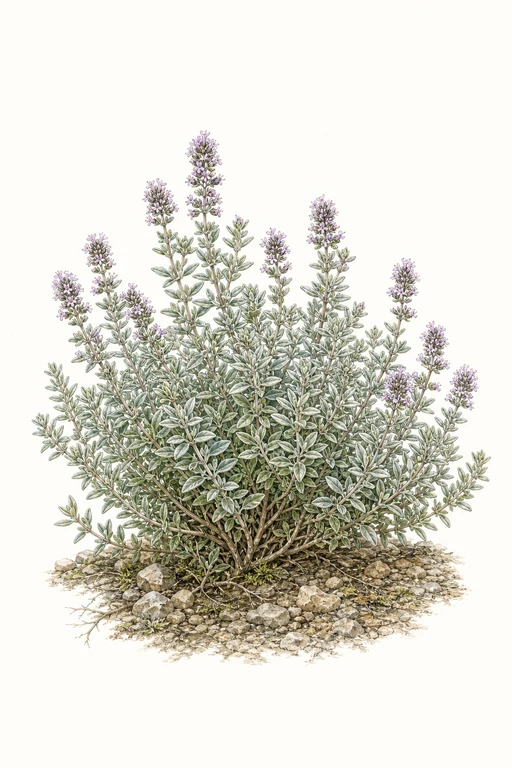
Aromatic as a sunlit hillside, Thymus vulgaris ‘Argenteus’ unfurls with silvery, softly downy foliage that glows against deep green stems.
The leaves carry a bright, thyme-forward flavor with a gentle, resinous lift—ideal for seasoning blends and herb-forward infusions. Grow it as a perennial that rewards close attention: snip sprigs for fresh fragrance, or let it dry for long-lasting culinary perfume.
Light: Full SunMaturity: 60 DaysHabit: Upright
Location not set yet
Location not set yet
Enter your ZIP for local crop dates
Thymus Vulgaris 'Argenteus Planting Dates by USDA Zone
Estimated US hardiness-zone windows for sow, transplant, and harvest. Enter a US ZIP above for exact local dates, or open a zone below.
| Zone | Start Indoors | Sow / Transplant | Harvest |
|---|---|---|---|
| Zone 1a | May 25th | Jul 27th | Sep 25th – Jul 15th |
| Zone 1b | May 11th | Jul 13th | Sep 11th – Aug 1st |
| Zone 2a | May 4th | Jul 6th | Sep 4th – Aug 29th |
| Zone 2b | Apr 24th | Jun 26th | Aug 25th – Aug 25th |
| Zone 3a | Apr 24th | Jun 26th | Aug 25th – Sep 1st |
| Zone 3b | Apr 28th | Jun 30th | Aug 29th – Sep 21st |
| Zone 4a | Apr 24th | Jun 26th | Aug 25th – Sep 24th |
| Zone 4b | Apr 22nd | Jun 24th | Aug 23rd – Sep 27th |
| Zone 5a | Apr 17th | Jun 19th | Aug 18th – Sep 30th |
| Zone 5b | Apr 13th | Jun 15th | Aug 14th – Oct 5th |
| Zone 6a | Apr 10th | Jun 12th | Aug 11th – Oct 10th |
| Zone 6b | Apr 4th | Jun 6th | Aug 5th – Oct 16th |
| Zone 7a | Mar 30th | Jun 1st | Jul 31st – Oct 20th |
| Zone 7b | Mar 20th | May 22nd | Jul 21st – Oct 28th |
| Zone 8a | Mar 11th | May 13th | Jul 12th – Nov 5th |
| Zone 8b | Mar 2nd | May 4th | Jul 3rd – Nov 12th |
| Zone 9a | Feb 13th | Apr 17th | Jun 16th – Nov 26th |
| Zone 9b | Jan 19th | Mar 23rd | May 22nd – Dec 9th |
| Zone 10a | — | Oct 1st | Nov 30th – Feb 28th |
| Zone 10b | — | Oct 1st | Nov 30th – Feb 28th |
| Zone 11a | — | Oct 1st | Nov 30th – Feb 28th |
| Zone 11b | — | Oct 1st | Nov 30th – Feb 28th |
| Zone 12a | — | Oct 1st | Nov 30th – Feb 28th |
| Zone 12b | — | Oct 1st | Nov 30th – Feb 28th |
| Zone 13a | — | Oct 1st | Nov 30th – Feb 28th |
| Zone 13b | — | Oct 1st | Nov 30th – Feb 28th |
Crop Details
| Trait | Value |
|---|---|
| Days to Maturity | 60 |
| Sun Requirements | Full Sun |
| Growth Habit | Upright |
| Support Needed | None |
| Planting Depth | Normal |
| Germination Temp (°F) | 70 |
| Min Soil Temp (°F) | 60 |
| Min Night Temp (°F) | 50 |
| Harden Off (days) | 7 |
Culinary Notes

Chef's Note
Thyme ‘Argenteus’ tastes like thyme turned up with a clean, resinous whistle—its oils really pop once warmed, so use it early in the simmer or in hot pan sauce. The silvery, downy leaves also dry beautifully, holding that perfumed character long after fresh sprigs are gone.

Best Uses
- pinch into slow-simmered stocks and broths where it blooms over time
- rub for roast chicken or lamb—dry, aromatic, and not sticky like some herbs
- stir into beurre blanc–style pan sauces and let the heat wake the oils
- infuse into vinegar or olive oil for herbaceous, slightly piney tang

Flavor Profile

Frequently Asked Questions
What pest or disease commonly affects Thymus vulgaris (Provence-type thyme), and how can I treat it?
How often should I water Thymus vulgaris during active growth?
How do I tell when Thymus vulgaris is ready to harvest?
Sowing Tips

Transplant Conditions
Wait until soil reaches 60°F and nights stay above 50°F before moving outdoors. Harden off for 7 days first.
Expert Note

Start thyme indoors for the longest season, but wait to transplant until nights are consistently warm and plants are stocky from hardening off.