
Tuscan Blue
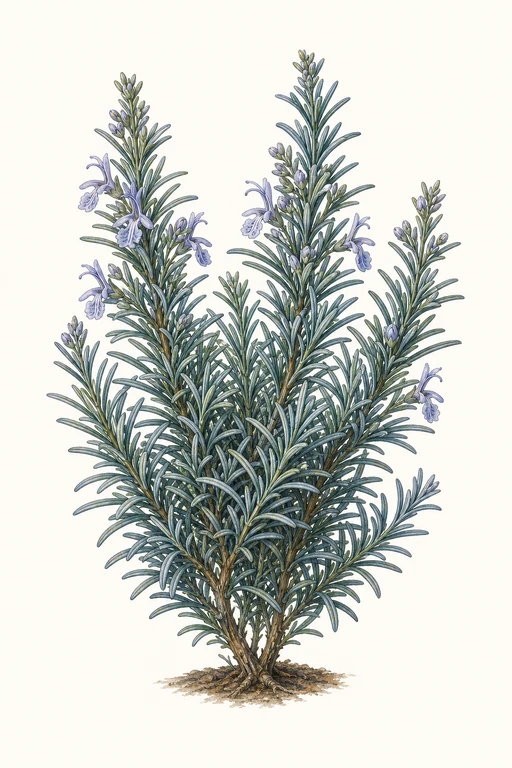
Tuscan Blue rosemary unfurls with an unmistakably cool, piney fragrance and a silvery-blue cast that catches the light like fine felt.
Its narrow, needlelike leaves hold a crisp, resinous bite and stay aromatic as plants mature, making it a standout for fresh sprigs and drying alike. Grow this compact, upright rosemary for bold flavor in herb-forward blends and for fragrant bouquets that keep their character season after season.
Light: Full SunHabit: Upright
Location not set yet
Location not set yet
Enter your ZIP for local crop dates
Tuscan Blue Planting Dates by USDA Zone
Estimated US hardiness-zone windows for sow, transplant, and harvest. Enter a US ZIP above for exact local dates, or open a zone below.
| Zone | Start Indoors | Sow / Transplant | Harvest |
|---|---|---|---|
| Zone 1a | Apr 20th | Jul 27th | Jul 27th – Jul 15th |
| Zone 1b | Apr 6th | Jul 13th | Jul 13th – Aug 1st |
| Zone 2a | Mar 30th | Jul 6th | Jul 6th – Aug 29th |
| Zone 2b | Mar 20th | Jun 26th | Jun 26th – Aug 25th |
| Zone 3a | Mar 20th | Jun 26th | Jun 26th – Sep 1st |
| Zone 3b | Mar 24th | Jun 30th | Jun 30th – Sep 21st |
| Zone 4a | Mar 20th | Jun 26th | Jun 26th – Sep 24th |
| Zone 4b | Mar 18th | Jun 24th | Jun 24th – Sep 27th |
| Zone 5a | Mar 13th | Jun 19th | Jun 19th – Sep 30th |
| Zone 5b | Mar 9th | Jun 15th | Jun 15th – Oct 5th |
| Zone 6a | Mar 6th | Jun 12th | Jun 12th – Oct 10th |
| Zone 6b | Feb 28th | Jun 6th | Jun 6th – Oct 16th |
| Zone 7a | Feb 23rd | Jun 1st | Jun 1st – Oct 20th |
| Zone 7b | Feb 13th | May 22nd | May 22nd – Oct 28th |
| Zone 8a | Feb 4th | May 13th | May 13th – Nov 5th |
| Zone 8b | Jan 26th | May 4th | May 4th – Nov 12th |
| Zone 9a | Jan 9th | Apr 17th | Apr 17th – Nov 26th |
| Zone 9b | Dec 15th | Mar 23rd | Mar 23rd – Dec 9th |
| Zone 10a | — | Oct 1st | Nov 15th – Feb 28th |
| Zone 10b | — | Oct 1st | Nov 15th – Feb 28th |
| Zone 11a | — | Oct 1st | Nov 15th – Feb 28th |
| Zone 11b | — | Oct 1st | Nov 15th – Feb 28th |
| Zone 12a | — | Oct 1st | Nov 15th – Feb 28th |
| Zone 12b | — | Oct 1st | Nov 15th – Feb 28th |
| Zone 13a | — | Oct 1st | Nov 15th – Feb 28th |
| Zone 13b | — | Oct 1st | Nov 15th – Feb 28th |
Crop Details
| Trait | Value |
|---|---|
| Days to Maturity | N/A |
| Sun Requirements | Full Sun |
| Growth Habit | Upright |
| Support Needed | None |
| Planting Depth | Normal |
| Germination Temp (°F) | 70 |
| Min Soil Temp (°F) | 60 |
| Min Night Temp (°F) | 50 |
| Harden Off (days) | 10 |
Culinary Notes

Chef's Note
Tuscan Blue rosemary is built for heat and time: its needles stay assertive without turning chalky, giving you that clean pine-resin snap from the first bite to the finish. Use it in oil or butter so the aromatic oils bloom fast, then let the roasting/braising do the heavy lifting.

Best Uses
- chopped into oily marinades for lamb and pork before a hot roast
- steeped and then removed in olive-oil or butter for a fragrant drizzle
- dry-rubbed onto potatoes and roasted vegetables (needle clusters hold up to heat)
- warmed sprigs in stews and braises, then fished out to keep the soup clean

Flavor Profile

Frequently Asked Questions
What pest or disease most commonly affects Salvia rosmarinus (Tuscan Blue), and how can I treat it?
How often should I water Tuscan Blue (Salvia rosmarinus) during active growth, and what soil moisture level should I maintain?
How do I tell when Tuscan Blue is ready to harvest?
Sowing Tips

Transplant Conditions
Wait until soil reaches 60°F and nights stay above 50°F before moving outdoors. Harden off for 10 days first.
Expert Note

Grow rosemary in a warm, sunny spot with excellent drainage; avoid overwatering and transplant only after nights stay reliably warm.