
Utah 52-70 Improved
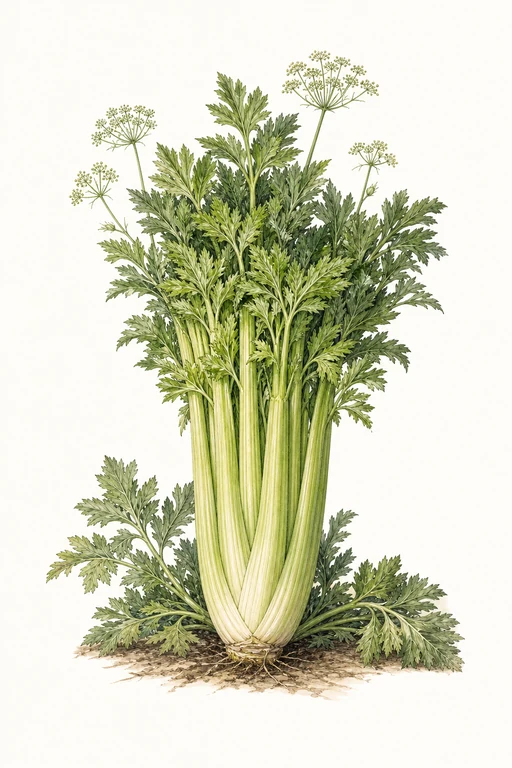
Crisp, cool stalks with a clean, celery-bright snap—Utah 52-70 Improved delivers a refined crunch and a pleasantly mild, garden-fresh flavor that feels especially vivid after a cool spell.
Expect tender ribs with a sturdy, upright habit that helps keep texture crisp and uniform, ideal for bunching and long-season enjoyment. Grow it for classic celery character in fresh salads, bright sauces, and savory pickles—its flavor stays lively from first harvest through the heart of the season.
Light: Part SunMaturity: 85 DaysHabit: Rosette
Location not set yet
Location not set yet
Enter your ZIP for local crop dates
Utah 52-70 Improved Planting Dates by USDA Zone
Estimated US hardiness-zone windows for sow, transplant, and harvest. Enter a US ZIP above for exact local dates, or open a zone below.
| Zone | Start Indoors | Sow / Transplant | Harvest |
|---|---|---|---|
| Zone 1a | Protected Environment Only | ||
| Zone 1b | Protected Environment Only | ||
| Zone 2a | Mar 16th | May 18th | Aug 11th – Aug 29th |
| Zone 2b | Mar 6th | May 8th | Aug 1st – Aug 25th |
| Zone 3a | Mar 6th | May 8th | Aug 1st – Sep 1st |
| Zone 3b | Mar 10th | May 12th | Aug 5th – Sep 21st |
| Zone 4a | Mar 6th | May 8th | Aug 1st – Sep 24th |
| Zone 4b | Mar 4th | May 6th | Jul 30th – Sep 27th |
| Zone 5a | Feb 27th | May 1st | Jul 25th – Sep 30th |
| Zone 5b | Feb 23rd | Apr 27th | Jul 21st – Oct 5th |
| Zone 6a | Feb 20th | Apr 24th | Jul 18th – Oct 10th |
| Zone 6b | Feb 14th | Apr 18th | Jul 12th – Oct 16th |
| Zone 7a | Feb 9th | Apr 13th | Jul 7th – Oct 20th |
| Zone 7b | Jan 30th | Apr 3rd | Jun 27th – Oct 28th |
| Zone 8a | Jan 21st | Mar 25th | Jun 18th – Nov 5th |
| Zone 8b | Jan 12th | Mar 16th | Jun 9th – Nov 12th |
| Zone 9a | Dec 26th | Feb 27th | May 23rd – Nov 26th |
| Zone 9b | Dec 1st | Feb 2nd | Apr 28th – Dec 9th |
| Zone 10a | — | Oct 1st | Dec 25th – Feb 28th |
| Zone 10b | — | Oct 1st | Dec 25th – Feb 28th |
| Zone 11a | — | Oct 1st | Dec 25th – Feb 28th |
| Zone 11b | — | Oct 1st | Dec 25th – Feb 28th |
| Zone 12a | — | Oct 1st | Dec 25th – Feb 28th |
| Zone 12b | — | Oct 1st | Dec 25th – Feb 28th |
| Zone 13a | — | Oct 1st | Dec 25th – Feb 28th |
| Zone 13b | — | Oct 1st | Dec 25th – Feb 28th |
Crop Details
| Trait | Value |
|---|---|
| Days to Maturity | 85 |
| Sun Requirements | Part Sun |
| Growth Habit | Rosette |
| Support Needed | None |
| Planting Depth | Normal |
| Germination Temp (°F) | 70 |
| Min Soil Temp (°F) | 45 |
| Min Night Temp (°F) | 35 |
| Harden Off (days) | 6 |
Culinary Notes

Chef's Note
Utah 52-70 Improved is built for that glassy, celery-cool crunch—tender ribs with a mild flavor that stays vivid rather than turning harsh. Use it raw or quick-set in brine so the snap is the headline, and let lemony acids and salty fats ride right alongside it.

Best Uses
- raw crudités and shaved-stalk salads where the crunch has to stay intact
- light vinaigrettes and creamy dips that cling without turning bitter
- quick brines for refrigerator pickles (snappy texture stays put)
- stock-making for a fresh, green backbone

Flavor Profile

Frequently Asked Questions
What’s the most common disease/pest issue for sweet celery (Apium graveolens var. dulce), and how do I treat it?
How often should I water sweet celery during its main growth phase, and what soil moisture level should I maintain?
How can I tell when ‘Utah 52-70 Improved’ sweet celery is ready to harvest?
Sowing Tips

Transplant Conditions
Wait until soil reaches 45°F and nights stay above 35°F before moving outdoors. Harden off for 6 days first.
Expert Note

For best results, direct-sow outdoors when soil is cool and keep plants evenly moist to promote thick, tender stalks.