
Utah 52-70
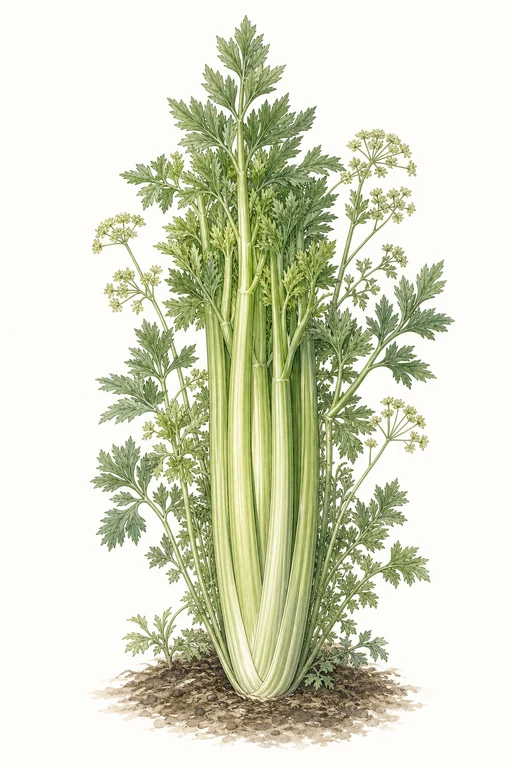
Crisp, cool stalks with a clean, bright snap—Utah 52-70 delivers a refreshing celery flavor that tastes distinctly “garden-fresh” from the first bite.
Expect sturdy, upright growth and a tender, finely textured interior that holds its character well for salads, slaws, and classic flavor-building bundles. Grow it for reliable, uniform performance at about 90 days, when the stalks reach their best balance of crunch and mellow celery sweetness.
Light: Part SunMaturity: 90 DaysHabit: Upright
Crop Dates : 8a
| Milestone | Date |
|---|---|
| Start Indoors | Jan 21st |
| Last Frost | Apr 1st |
| Transplant / Sow Outdoors | Mar 25th |
| Harvest Begins | Jun 23rd |
| Harvest Ends | Nov 5th |
Crop Details
| Trait | Value |
|---|---|
| Days to Maturity | 90 |
| Sun Requirements | Part Sun |
| Growth Habit | Upright |
| Support Needed | None |
| Planting Depth | Normal |
| Germination Temp (°F) | 70 |
| Min Soil Temp (°F) | 45 |
| Min Night Temp (°F) | 40 |
| Harden Off (days) | 7 |
Culinary Notes

Chef's Note
Utah 52-70 eats like a cold snap: the ribs stay crisp and tender instead of going stringy, so it doesn’t wilt out under dressing. Use it where you want that bright celery snap to read clearly—especially raw, pickled, or in lightly cooked broths where its sweetness can mellow without disappearing.

Best Uses
- raw ribbed crunch in salads and shaved slaws
- quick-pickles and brined snacks that stay snappy
- classic mirepoix-style flavor base for stocks and braises
- flavor-building celery-herb bundles for soups and poaching liquid

Flavor Profile

Frequently Asked Questions
What pest or disease most commonly affects Apium graveolens (celery), and what should I do?
How often should I water Apium graveolens during the main growing phase, and what soil moisture level should I keep?
How can I tell when Apium graveolens is ready to harvest?
Sowing Tips

Transplant Conditions
Wait until soil reaches 45°F and nights stay above 40°F before moving outdoors. Harden off for 7 days first.
Expert Note

Start celery early indoors because it’s slow from seed; transplant only after nights are consistently mild and the plants are well-branched (not spindly).