
Vegetable Spaghetti
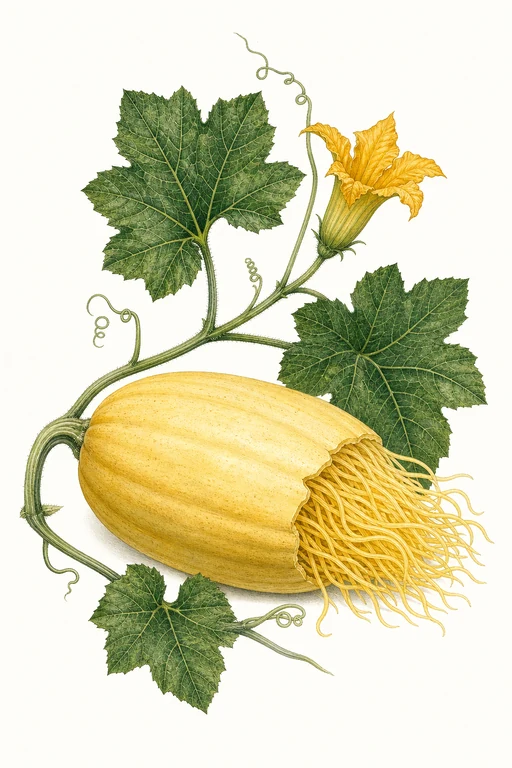
Roast-scented sweetness begins at the skin: Vegetable Spaghetti delivers long, golden strands that emerge like fine spun silk, with a tender, springy bite and a mild, buttery flavor that welcomes bold seasonings.
At maturity, the flesh turns warm honey-yellow and separates into spaghetti-like threads with a delicate, slightly nutty depth. Grow it for hearty winter meals—its strand-ready texture shines in baked casseroles, savory sauces, and simple pan-ready preparations, as well as pickled accents for a bright contrast.
Light: Full SunMaturity: 95 DaysHabit: Vine
Planting schedules and alerts are optimized for Columbus (Zone 6b).
Crop Dates
| Milestone | Date |
|---|---|
| Start Indoors | May 9th |
| Last Frost | Apr 25th |
| Transplant / Sow Outdoors | May 23rd |
| Harvest Begins | Aug 26th |
| Harvest Ends | Oct 16th |
Crop Details
| Trait | Value |
|---|---|
| Days to Maturity | 95 |
| Sun Requirements | Full Sun |
| Growth Habit | Vine |
| Support Needed | Trellis |
| Planting Depth | Normal |
| Germination Temp (°F) | 75 |
| Min Soil Temp (°F) | 65 |
| Min Night Temp (°F) | 55 |
| Harden Off (days) | 10 |
Culinary Notes

Chef's Note
Vegetable Spaghetti’s whole trick is the strand-resilience: roast until the flesh gives but still separates into clean threads, then dress it—don’t drown it—so it stays springy. Its mild, honey-nut squash flavor is a perfect delivery system for punchy garlic, tomato heat, and sharp cheese.

Best Uses
- roasted and forked into strand bowls with browned butter or olive-oil slicks
- baked casseroles where the strands stay springy instead of collapsing
- stirred into savory, reduced sauces to coat without turning mushy
- quick pickled-accent sides for tangy contrast

Flavor Profile

Frequently Asked Questions
What pest or disease most commonly affects Cucurbita pepo (spaghetti squash), and how can I control it?
How often should I water Cucurbita pepo during the main growing phase, and what soil moisture level should I maintain?
How do I tell when Cucurbita pepo (vegetable spaghetti) is ready to harvest?
Sowing Tips

Transplant Conditions
Wait until soil reaches 65°F and nights stay above 55°F before moving outdoors. Harden off for 10 days first.

Direct Sow Preferred
Sensitive roots — does not transplant well. If starting indoors, use biodegradable pots and disturb roots as little as possible when moving outdoors.
Expert Note

Warm up the bed (black plastic or row cover early) and transplant only after soil is reliably warm to avoid stalled growth.