
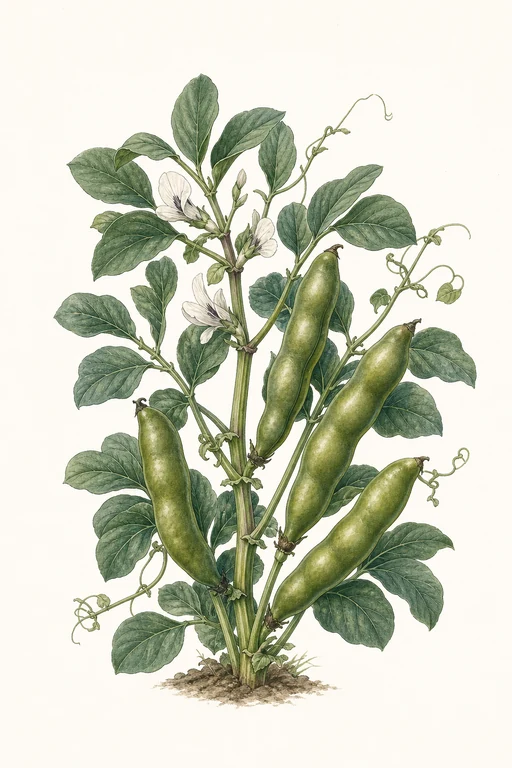
Vicia faba 'Hollander'
Sweet and richly beany, Hollander fava beans arrive with a tender, creamy bite that feels almost velvet between the tongue and the pod.
At maturity, the pods hold plump, well-filled seeds with a bright, fresh flavor profile that shines in simple preparations—ideal for showcasing their natural sweetness in classic fava-style dishes, as well as for purées and hearty spreads. Grow Hollander for a garden-to-table harvest that’s both generous and satisfying, with pods that look as good as they taste.
Light: Full SunMaturity: 90 DaysHabit: Upright
Planting schedules and alerts are optimized for Columbus (Zone 6b).
Crop Dates
| Milestone | Date |
|---|---|
| Start Indoors | Direct Sow |
| Last Frost | Apr 25th |
| Transplant / Sow Outdoors | Apr 25th |
| Harvest Begins | Jul 24th |
| Harvest Ends | Oct 16th |
Crop Details
| Trait | Value |
|---|---|
| Days to Maturity | 90 |
| Sun Requirements | Full Sun |
| Growth Habit | Upright |
| Support Needed | None |
| Planting Depth | Normal |
| Germination Temp (°F) | 50 |
| Min Soil Temp (°F) | 45 |
| Min Night Temp (°F) | 28 |
| Harden Off (days) | Not Required |
Culinary Notes

Chef's Note
Hollander favas lean sweet and creamy rather than harsh or grassy, which is why they taste most truthful when treated gently—hot, then dressed, not overworked. The payoff is a velvet mouthfeel that grips butter, lemon, and salty cheese without turning starchy or dry.

Best Uses
- peeling and serving as warm, buttery beans with a squeeze of lemon
- pureeing into a smooth fava spread or dip (thickened by the bean starch)
- tossing into a hot pasta with browned butter and salty cheese
- pan-roasting or grilling the tender pods/beans for a lightly nutty edge

Flavor Profile

Frequently Asked Questions
What pest or disease most commonly affects fava beans (Vicia faba), and how do I treat it?
How often should I water fava beans during their main growth phase?
How can I tell when my fava beans (Vicia faba) are ready to harvest?
Sowing Tips

Transplant Conditions
Wait until soil reaches 45°F and nights stay above 28°F before moving outdoors.
Expert Note

Direct-sow fava beans as soon as soil is workable and keep them evenly moist early for the most vigorous, high-yield stands.