
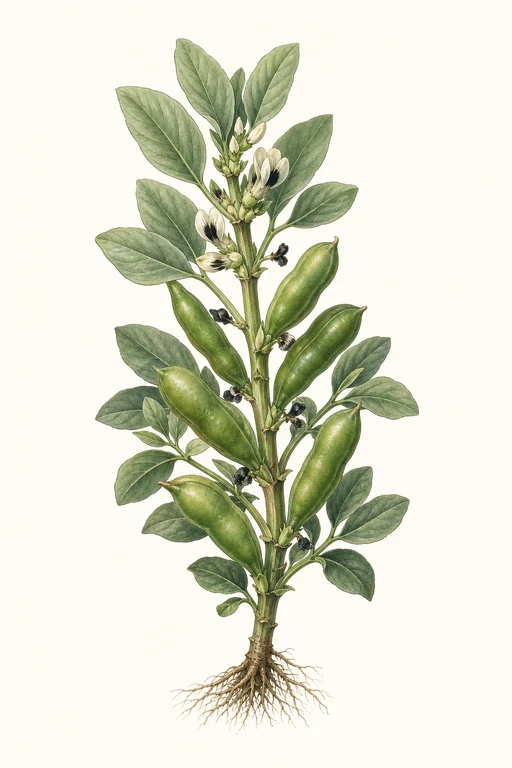
Vicia faba 'Sutton Dwarf'
Sweet, creamy pods arrive in just 55 days, their tender interiors promising a lush, garden-fresh bite with a subtly nutty depth.
‘Sutton Dwarf’ forms compact plants that bear abundant, upright pods—smooth-skinned and pleasantly meaty—ideal for savoring at peak tenderness. Grow it for early, reliable harvests and for making rich, velvety bean-forward dishes, from spoonable purées to bright, spoon-ready salads and quick pickling-style preserves.
Light: Full SunMaturity: 55 DaysHabit: Upright
Planting schedules and alerts are optimized for Columbus (Zone 6b).
Crop Dates
| Milestone | Date |
|---|---|
| Start Indoors | Direct Sow |
| Last Frost | Apr 25th |
| Transplant / Sow Outdoors | Apr 25th |
| Harvest Begins | Jun 19th |
| Harvest Ends | Oct 16th |
Crop Details
| Trait | Value |
|---|---|
| Days to Maturity | 55 |
| Sun Requirements | Full Sun |
| Growth Habit | Upright |
| Support Needed | None |
| Planting Depth | Normal |
| Germination Temp (°F) | 55 |
| Min Soil Temp (°F) | 40 |
| Min Night Temp (°F) | 28 |
| Harden Off (days) | Not Required |
Culinary Notes

Chef's Note
‘Sutton Dwarf’ is bred for early, tender pods—when the beans are young, they go from sweet snap to creamy melt fast, so don’t overcook them. Use the beans where you want that spoonable, velvety texture: purées, thick soups, or warm salads dressed at the last second with lemon and olive oil.

Best Uses
- quick shucking and eating straight—barely cooked for a spoonable bite
- purée base for velvety bean soups and thick potage
- tossed into warm salads where the beans hold their structure
- quick pickling-style preserves to keep the snap of green sweetness

Flavor Profile

Frequently Asked Questions
What pest or disease is most likely on Vicia faba (fava beans) and how do I control it at home?
How often should I water Vicia faba during the main growing phase?
How can I tell when Vicia faba 'Sutton Dwarf' is ready to harvest?
Sowing Tips

Transplant Conditions
Wait until soil reaches 40°F and nights stay above 28°F before moving outdoors.
Expert Note

Direct-sow fava in cool weather (so roots aren’t disturbed), keep soil evenly moist early, and harvest young for best tenderness.