
White Flat Boer
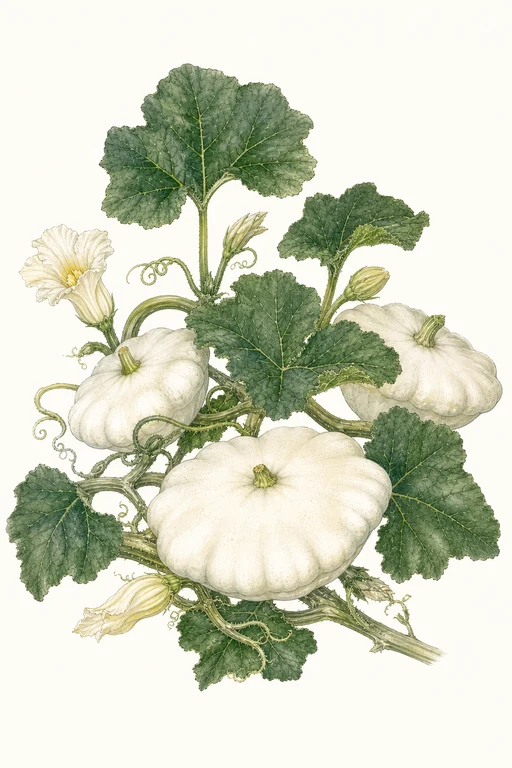
Silky, snow-white pattypans with a gently fluted crown arrive at maturity like small porcelain saucers—tender, mild, and delicately sweet.
Their firm, fine-grained flesh holds its shape beautifully, offering a satisfying bite whether you savor them fresh or roast until lightly golden. White Flat Boer is a standout for gardeners who want abundant, attractive fruit that shines in summer displays and performs reliably from bed to basket for sauces and quick pickling.
Light: Full SunMaturity: 95 DaysHabit: Vine
Crop Dates : 10a
| Milestone | Date |
|---|---|
| Climate | Frost-Free Climate |
| Growing Approach | Continuous Production |
Crop Details
| Trait | Value |
|---|---|
| Days to Maturity | 95 |
| Sun Requirements | Full Sun |
| Growth Habit | Vine |
| Support Needed | Trellis |
| Planting Depth | Normal |
| Germination Temp (°F) | 70 |
| Min Soil Temp (°F) | 65 |
| Min Night Temp (°F) | 55 |
| Harden Off (days) | 10 |
Culinary Notes

Chef's Note
White Flat Boer pattypans are mild and sweet with flesh that stays composed—perfect for high-heat cooking where you want browning without mush. Think crisp pickles or lightly charred rounds: they hold their shape, take on lemon-vinegar brightness, and make an elegant little platter without tasting “too squash-y.”

Best Uses
- quick pickling for crisp, fluted rounds
- roasting or sautéing until the flat edges brown and caramelize
- light summer sautés with herbs and lemon to keep the sweetness clean
- thin-slice skillet cooking for bite-sized, shape-holding pieces

Flavor Profile

Frequently Asked Questions
What pest or disease problem is most common on Cucurbita pepo (white flat boer), and how do I treat it?
How often should I water Cucurbita pepo during the main growing phase, and what soil moisture target should I maintain?
How can I tell when Cucurbita pepo (white flat boer) is ready to harvest?
Sowing Tips

Transplant Conditions
Wait until soil reaches 65°F and nights stay above 55°F before moving outdoors. Harden off for 10 days first.

Direct Sow Preferred
Sensitive roots — does not transplant well. If starting indoors, use biodegradable pots and disturb roots as little as possible when moving outdoors.
Expert Note

For best success, either direct-sow after warm soil arrives or start indoors briefly and transplant only with intact soil to reduce transplant shock in this cucurbit.