
White Star
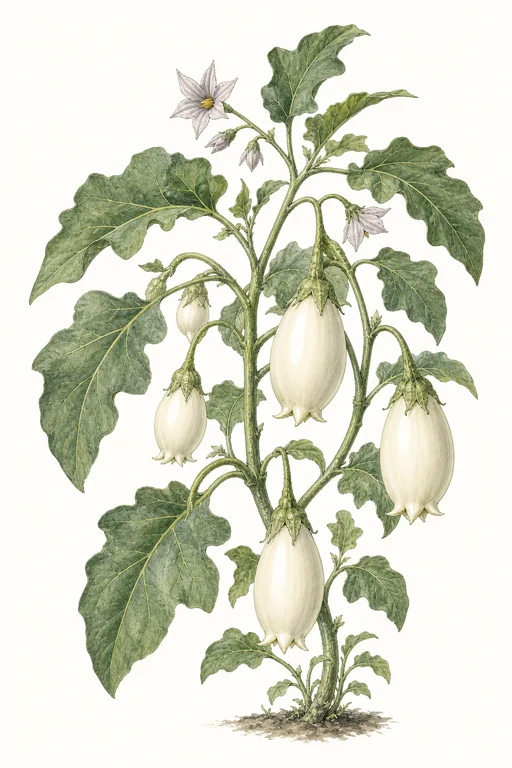
Silken, moonlit fruit with a crisp, satin sheen—White Star eggplant brings a luminous presence to the garden and a delicate, refined flavor to the plate.
At maturity, the fruits are firm and pleasantly tender, with a creamy interior that lends itself beautifully to roasting and grilling, as well as silky sauces and hearty casseroles. Grow White Star for its standout white color and starry, showpiece appeal—an elegant choice for gardeners who love both beauty and versatility.
Light: Full SunMaturity: 80 DaysHabit: Indeterminate
Location not set yet
Location not set yet
Enter your ZIP for local crop dates
White Star Planting Dates by USDA Zone
Estimated US hardiness-zone windows for sow, transplant, and harvest. Enter a US ZIP above for exact local dates, or open a zone below.
| Zone | Start Indoors | Sow / Transplant | Harvest |
|---|---|---|---|
| Zone 1a | Protected Environment Only | ||
| Zone 1b | Protected Environment Only | ||
| Zone 2a | Apr 6th | Jul 20th | Oct 8th – Aug 29th |
| Zone 2b | Mar 27th | Jul 10th | Sep 28th – Aug 25th |
| Zone 3a | Mar 27th | Jul 10th | Sep 28th – Sep 1st |
| Zone 3b | Mar 31st | Jul 14th | Oct 2nd – Sep 21st |
| Zone 4a | Mar 27th | Jul 10th | Sep 28th – Sep 24th |
| Zone 4b | Mar 25th | Jul 8th | Sep 26th – Sep 27th |
| Zone 5a | Mar 20th | Jul 3rd | Sep 21st – Sep 30th |
| Zone 5b | Mar 16th | Jun 29th | Sep 17th – Oct 5th |
| Zone 6a | Mar 13th | Jun 26th | Sep 14th – Oct 10th |
| Zone 6b | Mar 7th | Jun 20th | Sep 8th – Oct 16th |
| Zone 7a | Mar 2nd | Jun 15th | Sep 3rd – Oct 20th |
| Zone 7b | Feb 20th | Jun 5th | Aug 24th – Oct 28th |
| Zone 8a | Feb 11th | May 27th | Aug 15th – Nov 5th |
| Zone 8b | Feb 2nd | May 18th | Aug 6th – Nov 12th |
| Zone 9a | Jan 16th | May 1st | Jul 20th – Nov 26th |
| Zone 9b | Dec 22nd | Apr 6th | Jun 25th – Dec 9th |
| Zone 10a | Continuous Production | ||
| Zone 10b | Continuous Production | ||
| Zone 11a | Continuous Production | ||
| Zone 11b | Continuous Production | ||
| Zone 12a | Continuous Production | ||
| Zone 12b | Continuous Production | ||
| Zone 13a | Continuous Production | ||
| Zone 13b | Continuous Production | ||
Crop Details
| Trait | Value |
|---|---|
| Days to Maturity | 80 |
| Sun Requirements | Full Sun |
| Growth Habit | Indeterminate |
| Support Needed | Stake |
| Planting Depth | Normal |
| Germination Temp (°F) | 85 |
| Min Soil Temp (°F) | 60 |
| Min Night Temp (°F) | 50 |
| Harden Off (days) | 10 |
Culinary Notes

Chef's Note
White Star’s pale, creamy interior cooks up silken without tasting bitter, so it’s a dream for hot roasting where you want a browned exterior and a spoonable center. It drinks olive oil like a sponge and balances beautifully with sharp lemon or tangy tomato—no heavy salting theatrics required for flavor.

Best Uses
- halved-and-roasted slices (or plank-grilled) for caramelized edges and spoonable centers
- smoky grilled eggplant “steaks” dressed with sharp acid (lemon/vinegar)
- silken braises and purees where it can thicken and melt down
- eggplant-forward casseroles that need a creamy, sliceable, non-slimy texture

Flavor Profile

Frequently Asked Questions
What are the most common pests or diseases for Solanum melongena (eggplant/“White Star”) and how do I treat them?
How often should I water eggplant (Solanum melongena) during the main growing phase?
How can I tell when my “White Star” eggplants are ready to harvest?
Sowing Tips

Transplant Conditions
Wait until soil reaches 60°F and nights stay above 50°F before moving outdoors. Harden off for 10 days first.
Expert Note

Use warm media and keep seedlings consistently warm (bright light + steady moisture) so transplant shock is minimized and fruit sets reliably.