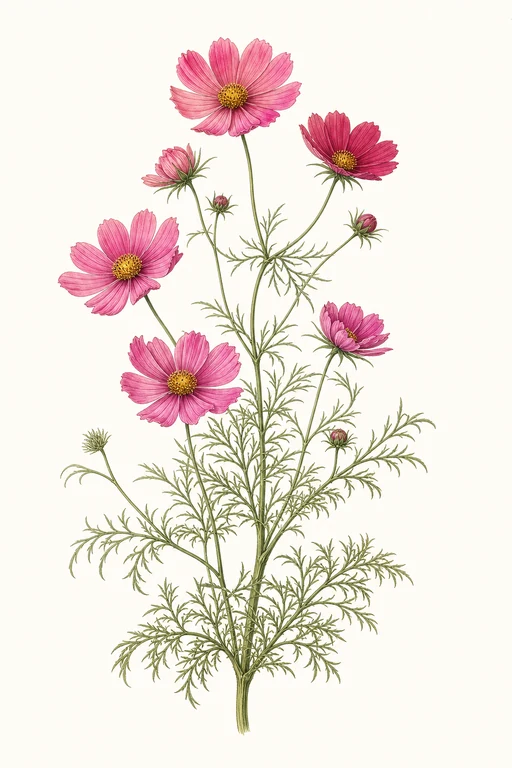
Cosmos
60d to harvest
Feathery, cloudlike blooms open in a vivid wash of color—silky petals with a crisp, satiny sheen that catches the light from every angle. Cosmos ‘Cosmos’ forms airy, upright stems topped with long-lasting flowers, offering a delicate crunch of texture in the garden and a graceful presence in arrangements. Grow it for abundant cut-flower color and effortless massing in beds and borders, where its airy foliage makes every planting feel light and luminous.
Crop Dates
Growing note: In frost-free Zone 10b, grow this cool-season crop during the cooler dry season (October–February).
| Milestone | Date |
|---|---|
| Start Indoors | — |
| Climate | Frost-Free Climate |
| Transplant / Sow Outdoors | Oct 1st |
| Harvest Begins | Nov 30th |
| Harvest Ends | Feb 28th |
Crop Details
| Trait | Value |
|---|---|
| Days to Maturity | 60 |
| Sun Requirements | Full Sun |
| Growth Habit | Upright |
| Support Needed | None |
| Planting Depth | Normal |
| Germination Temp (°F) | 75 |
| Min Soil Temp (°F) | 60 |
| Min Night Temp (°F) | 50 |
| Harden Off (days) | 7 |
Recommended Companions
Frequently Asked Questions
What pest or disease commonly affects Cosmos bipinnatus, and how can I control it at home?
Asteraceae plants like Cosmos bipinnatus are commonly bothered by aphids, especially on soft new growth and flower buds. Spray the stems and undersides of leaves with a strong jet of water, then follow with insecticidal soap if you still see colonies after 2–3 days. Watch also for powdery mildew in humid conditions—space plants well, water at the soil line, and remove heavily affected leaves early to slow spread.
How often should I water Cosmos bipinnatus during the main growing phase (after seedlings establish)?
After establishment, water deeply about 1–2 times per week, enough to moisten the root zone but not keep the soil constantly wet. Cosmos bipinnatus prefers evenly moist soil at first, then performs best with drier intervals once plants are actively growing—water when the top 1 inch of soil feels dry. Avoid frequent light watering, which encourages weak growth and increases the chance of mildew.