SproutSmart
SproutSmart Intelligent Garden Sowing

Early Flat Dutch

Cabbage
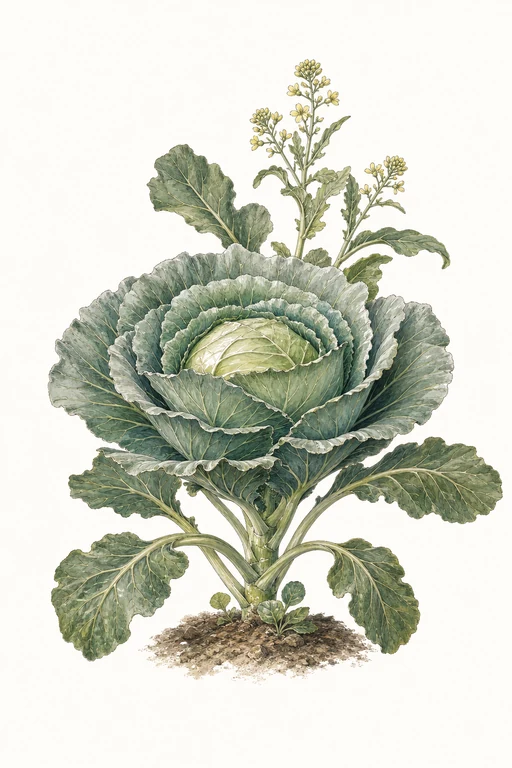
Botanical illustration of Early Flat Dutch
🌱 55d to harvest Rosette

Crisp, sweet-scented leaves form a compact, flat-round head that feels satisfyingly dense in the hand—an inviting crunch with a c…

Planting Schedule

Add Early Flat Dutch to your garden to build a schedule and get reminders.

Crop Dates

MilestoneDate
Start IndoorsDec 4th
Last FrostJan 1st
Transplant / Sow OutdoorsJan 1st
Harvest BeginsFeb 25th
Harvest EndsDec 31st

Crop Details

TraitValue
Days to Maturity55
Sun RequirementsFull SunFull sun
Growth HabitRosette
Support NeededNone
Planting DepthNormal
Germination Temp (°F)45
Min Soil Temp (°F)40
Min Night Temp (°F)32
Harden Off (days)6

Frequently Asked Questions


What pest or disease commonly affects Brassica oleracea var. capitata (Early Flat Dutch cabbage), and how can I control it?
Cabbage often suffers from clubroot (soil-borne), which causes swollen, clubbed roots and wilting even when soil looks moist. To address it, avoid planting Brassicaceae in the same spot for several years, keep soil pH closer to neutral (lime if your test is low), and remove infected plants early. If you see holes and frass on leaves, treat promptly with row cover to exclude cabbage worms and hand-remove visible eggs/larvae when possible.
How often should I water Early Flat Dutch cabbage during the main growing phase?
During head formation (roughly mid-season), keep soil evenly moist but not waterlogged—about 1 inch of water per week total, split into 2–3 deeper waterings if it’s hot or windy. Check the bed by feel: the top 1–2 inches should be consistently damp, and you shouldn’t have dry patches that lead to uneven head growth.
How do I tell when Early Flat Dutch cabbage is ready to harvest?
Harvest at about 55 days when the head feels firm to the squeeze and the outer leaves look fully developed without splitting. Cut the head at the base with a sharp knife, and aim to harvest before prolonged heat or heavy rain that can cause cracking. If you notice outer leaves loosening and the head feels less dense, harvest right away.
Botanical illustration of Early Flat Dutch

Crisp, sweet-scented leaves form a compact, flat-round head that feels satisfyingly dense in the hand—an inviting crunch with a clean, cabbage-forward sweetness. Early Flat Dutch delivers dependable early harvests, producing attractive blue-green foliage that stays tender and flavorful for fresh use and quick skillet-style meals, as well as classic slaws and tangy ferments.

Sowing Tips

Transplant Conditions

Wait until soil reaches 40°F and nights stay above 32°F before moving outdoors. Harden off for 6 days first.

Expert Note

For the sweetest flavor and tight heads, keep soil evenly moist and avoid high heat once heads begin forming.