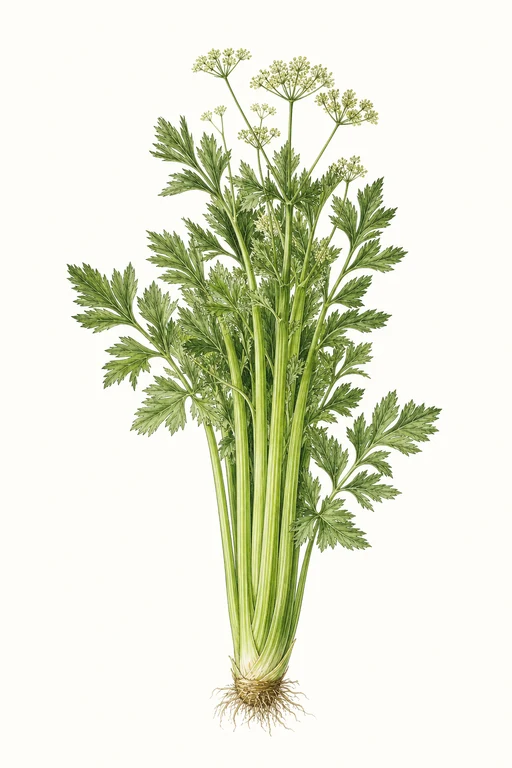
Tendercrisp
Celery
🌱 75d to harvest
Upright
Crisp as a fresh snowfall, Tendercrisp cutting celery forms tender, bright stalks with a clean, sweet-green snap and a pleasantly…
Crop Dates
| Milestone | Date |
|---|---|
| Start Indoors | Nov 20th |
| Last Frost | Jan 1st |
| Transplant / Sow Outdoors | Jan 1st |
| Harvest Begins | Mar 17th |
| Harvest Ends | Dec 31st |
Crop Details
| Trait | Value |
|---|---|
| Days to Maturity | 75 |
| Sun Requirements | Part Sun |
| Growth Habit | Upright |
| Support Needed | None |
| Planting Depth | Normal |
| Germination Temp (°F) | 70 |
| Min Soil Temp (°F) | 45 |
| Min Night Temp (°F) | 35 |
| Harden Off (days) | 7 |
Recommended Companions
Frequently Asked Questions
What pest or disease commonly affects Apium graveolens var. secalinum (Tendercrisp celery) and how do I treat it?
Tendercrisp celery is prone to early blight–type leaf spotting and, especially in damp weather, fungal leaf diseases that start as small brown lesions and spread on petioles. Remove and discard infected leaves, water at the base (not over the foliage), and improve airflow by thinning plants so leaves don’t stay wet. If problems spread, apply a labeled fungicide appropriate for celery and follow the label’s timing and reapplication intervals.
How often should I water Tendercrisp celery during the main growing phase?
During the 6–8 weeks leading up to harvest (around the time plants are filling in), keep the soil consistently moist but not waterlogged—aim for an even damp feel 1–2 inches down. Water about 1–2 times per week depending on heat, increasing frequency during warm spells so the growing medium never dries out completely. Mulch around the plants to reduce moisture swings, which helps prevent cracking, bitterness, and stunted petioles.
How can I tell when Tendercrisp celery is ready to harvest?
Harvest at about 75 days from sowing/transplanting as plants reach full size and petioles feel crisp and firm rather than limp. Look for well-developed, upright stems with a blanched, pale interior if you’ve been practicing earthing-up or light blanching; the texture should be tender and crunchy. You can harvest outer stalks first for a staggered crop, or cut the whole plant when most stalks meet the desired thickness.