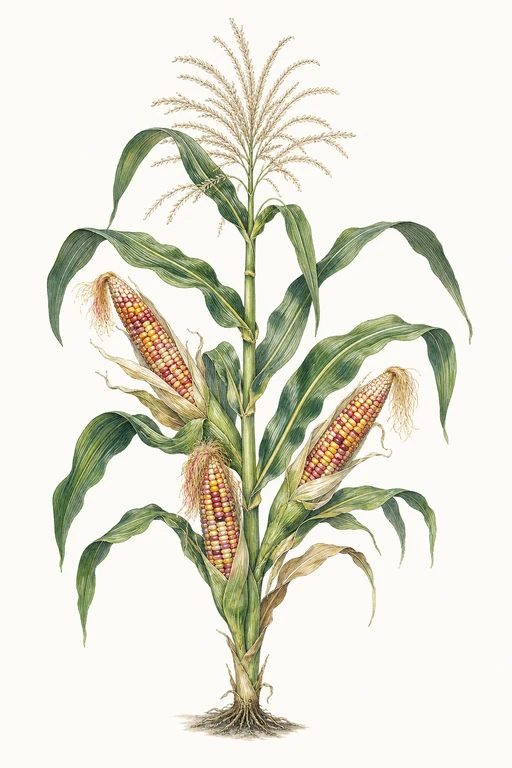
Calico Corn
70d to harvest
Wake to a feast of color in the garden: Calico Corn ripens into jewel-toned ears where creamy kernels blush through warm butter, rose-gold, and deep ember-red in painterly streaks. The kernels are plump and firm with a crisp, satisfying bite, making each ear a striking centerpiece for autumn displays and seasonal arrangements. Grow Calico Corn for its bold, ornamental presence—an easy way to add vivid texture and lasting visual drama to your landscape at peak maturity.
Crop Dates
Growing note: In frost-free Zone 11a, grow this cool-season crop during the cooler dry season (October–February).
| Milestone | Date |
|---|---|
| Start Indoors | — |
| Climate | Frost-Free Climate |
| Transplant / Sow Outdoors | Oct 1st |
| Harvest Begins | Dec 10th |
| Harvest Ends | Feb 28th |
Crop Details
| Trait | Value |
|---|---|
| Days to Maturity | 70 |
| Sun Requirements | Full Sun |
| Growth Habit | Upright |
| Support Needed | None |
| Planting Depth | Normal |
| Germination Temp (°F) | 60 |
| Min Soil Temp (°F) | 60 |
| Min Night Temp (°F) | 50 |
| Harden Off (days) | Not Required |
Recommended Companions
Frequently Asked Questions
What pest is most likely to hit sweet corn (Zea mays var. saccharata) and how do I stop it?
Watch for corn earworm/bollworm, which leaves frass at the tip of developing ears. When silks are fresh (about 1–3 days after they emerge), apply an earworm-targeted control such as Bt (bacillus thuringiensis) that’s labeled for caterpillars, and reapply as directed. Also remove and discard badly damaged ears early so larvae don’t move to neighboring plants.
How often should I water calico sweet corn during the main growing phase?
During the rapid growth and tassel-to-silk period, keep soil evenly moist—aim for about 1 to 1.5 inches (2.5–3.8 cm) of water per week, split across 2–3 deep waterings if it’s hot. Sweet corn is sensitive to drought stress during silk emergence and ear development; if the top inch of soil dries out repeatedly, yields and kernel fill drop. Use mulch to reduce swings in soil moisture, and avoid soaking leaves late in the day to limit disease.