
Trinidad Moruga Scorpion
Hot Pepper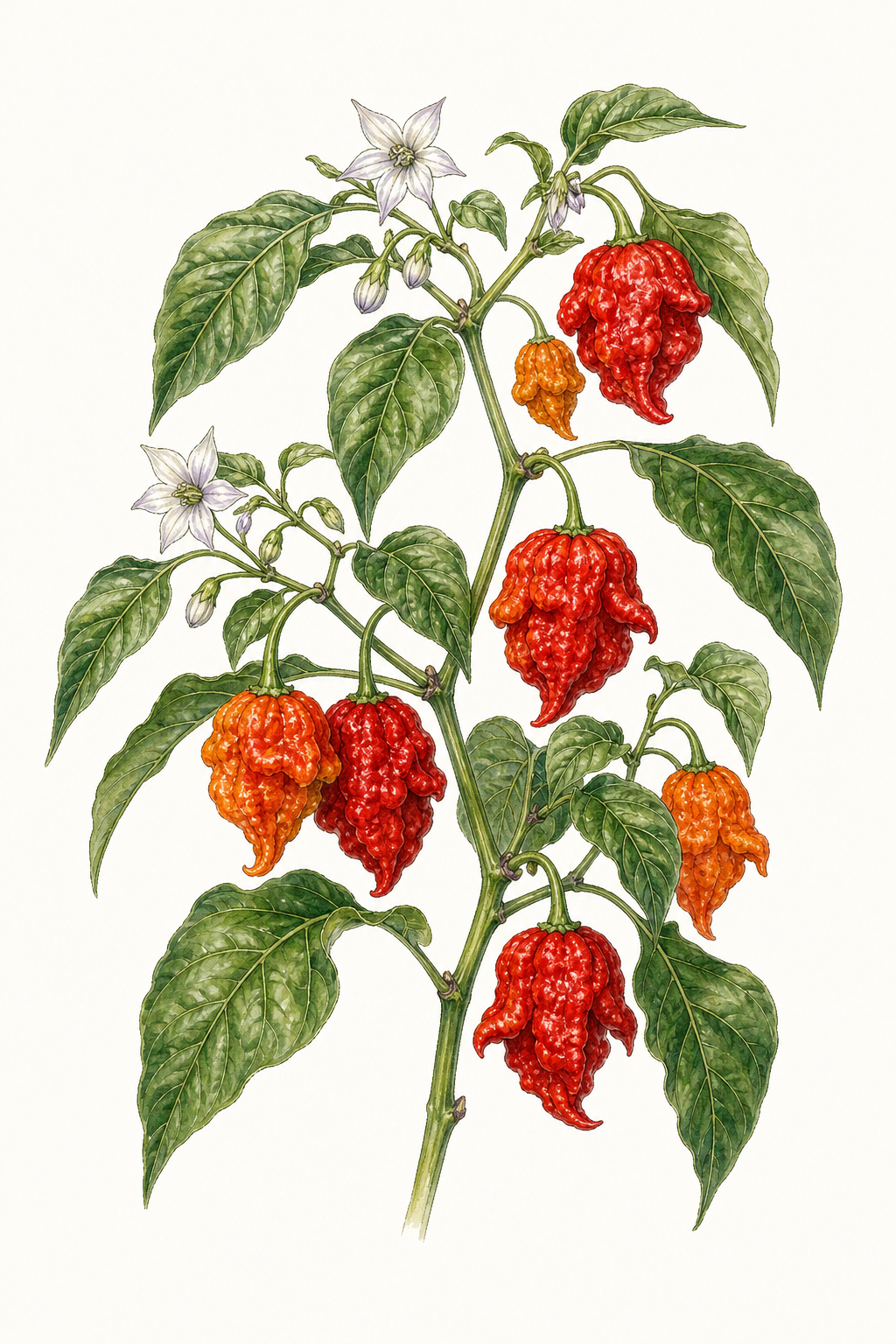
Fragrant, fiery, and unmistakably bold—Trinidad Moruga Scorpion brings a dramatic rush of heat with a complex, smoky-sweet edge t…
Crop Dates
| Milestone | Date |
|---|---|
| Start Indoors | Nov 6th |
| Last Frost | Jan 1st |
| Transplant / Sow Outdoors | Feb 26th |
| Harvest Begins | Jun 16th |
| Harvest Ends | Dec 31st |
Crop Details
| Trait | Value |
|---|---|
| Days to Maturity | 110 |
| Sun Requirements | Full Sun |
| Growth Habit | Upright |
| Support Needed | Stake |
| Planting Depth | Normal |
| Germination Temp (°F) | 80 |
| Min Soil Temp (°F) | 60 |
| Min Night Temp (°F) | 50 |
| Harden Off (days) | 10 |
Recommended Companions
Frequently Asked Questions
What pest or disease most commonly affects Capsicum chinense (Trinidad Moruga Scorpion), and how can I control it at home?
How often should I water Trinidad Moruga Scorpion during the main growing phase?
How do I tell when Trinidad Moruga Scorpion pods are ready to harvest?
Fragrant, fiery, and unmistakably bold—Trinidad Moruga Scorpion brings a dramatic rush of heat with a complex, smoky-sweet edge that lingers like embers. At maturity, the peppers hang in rugged, wrinkled pods that feel thick-skinned and ridged to the touch, their color shifting through deep green to vivid orange and finally blazing red. Grow for the intense punch that makes it a standout in fiery sauces, chile-forward pastes, and bold pickling projects where flavor and heat must both speak loudly.
Sowing Tips

Transplant Conditions
Wait until soil reaches 60°F and nights stay above 50°F before moving outdoors. Harden off for 10 days first.
Expert Note

Give extra time for slow heat-build and keep plants warm and evenly moist; colder spells often delay flowering even if plants survive.