SproutSmart
SproutSmart Intelligent Garden Sowing

Tulsi Wildlife

Basil
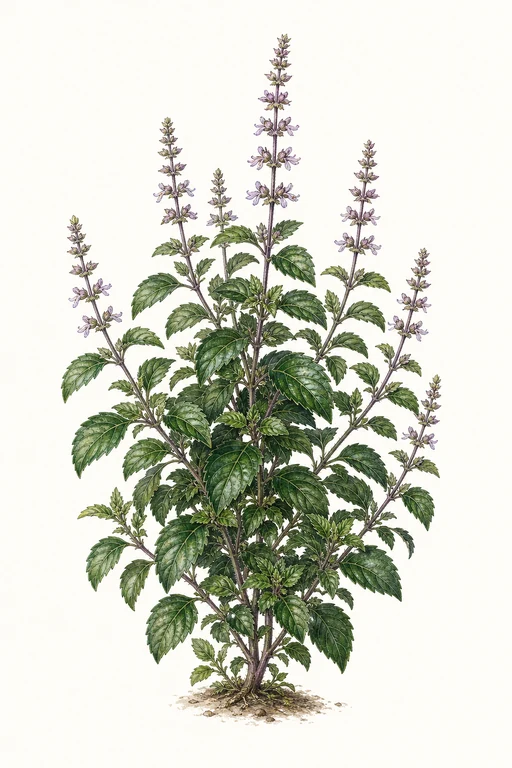
Botanical illustration of Tulsi Wildlife
🌱 60d to harvest Upright

Aromatic and alive with an unmistakable, gently peppery tulsi fragrance, ‘Tulsi Wildlife’ fills the garden air with a cool, green…

Planting Schedule

Add Tulsi Wildlife to your garden to build a schedule and get reminders.

Crop Dates

MilestoneDate
Start IndoorsNov 20th
Last FrostJan 1st
Transplant / Sow OutdoorsJan 15th
Harvest BeginsMar 16th
Harvest EndsDec 31st

Crop Details

TraitValue
Days to Maturity60
Sun RequirementsFull SunFull sun
Growth HabitUpright
Support NeededNone
Planting DepthNormal
Germination Temp (°F)70
Min Soil Temp (°F)60
Min Night Temp (°F)50
Harden Off (days)10

Frequently Asked Questions


What pest or disease most commonly affects Ocimum tenuiflorum (holy basil), and how do I manage it?
Holy basil (Ocimum tenuiflorum) is commonly hit by downy mildew and leaf spots in humid weather, which causes yellowing and dark lesions on leaves. Remove and discard infected leaves, water at the soil line (not the foliage), and improve airflow by spacing plants so leaves don’t stay wet. If problems keep recurring, use a labeled organic fungicide and repeat as directed on the label, especially after humid/rainy periods.
How often should I water Ocimum tenuiflorum during its main growing phase?
During active growth, keep the soil evenly moist but not soggy—aim for light moisture at the top 1 inch while allowing good drainage. In full sun, this usually means watering about 1–2 times per week, increasing to more frequent watering during hot spells. Avoid letting pots dry out completely between waterings, which can stress plants and reduce leaf flush.
How can I tell when holy basil (Ocimum tenuiflorum) is ready to harvest?
Harvest when plants are about 8–12 weeks old (often around day ~60) and have plentiful healthy side shoots with leaves at least a couple inches long. Pinch or snip the top 2–4 sets of leaves, ideally before flowering to keep flavor strong and encourage bushy regrowth. If flower buds begin forming, start harvesting more regularly to maintain tender leaf growth.
Botanical illustration of Tulsi Wildlife

Aromatic and alive with an unmistakable, gently peppery tulsi fragrance, ‘Tulsi Wildlife’ fills the garden air with a cool, green lift as the leaves mature. The foliage forms dense, upright clumps of small, glossy leaves with a tender, velvety texture—ideal for gathering at peak freshness. Grow it for bold herbal flavor in fragrant teas and infusions, and for vibrant pesto-style sauces, finishing oils, and pickling brines where its signature aroma shines.

Sowing Tips

Transplant Conditions

Wait until soil reaches 60°F and nights stay above 50°F before moving outdoors. Harden off for 10 days first.

Expert Note

Start basil indoors warm, then transplant only when nighttime temps stay ≥50°F and keep plants evenly moist for the best leaf yield.