
Cynara cardunculus 'Giant'
Cardoon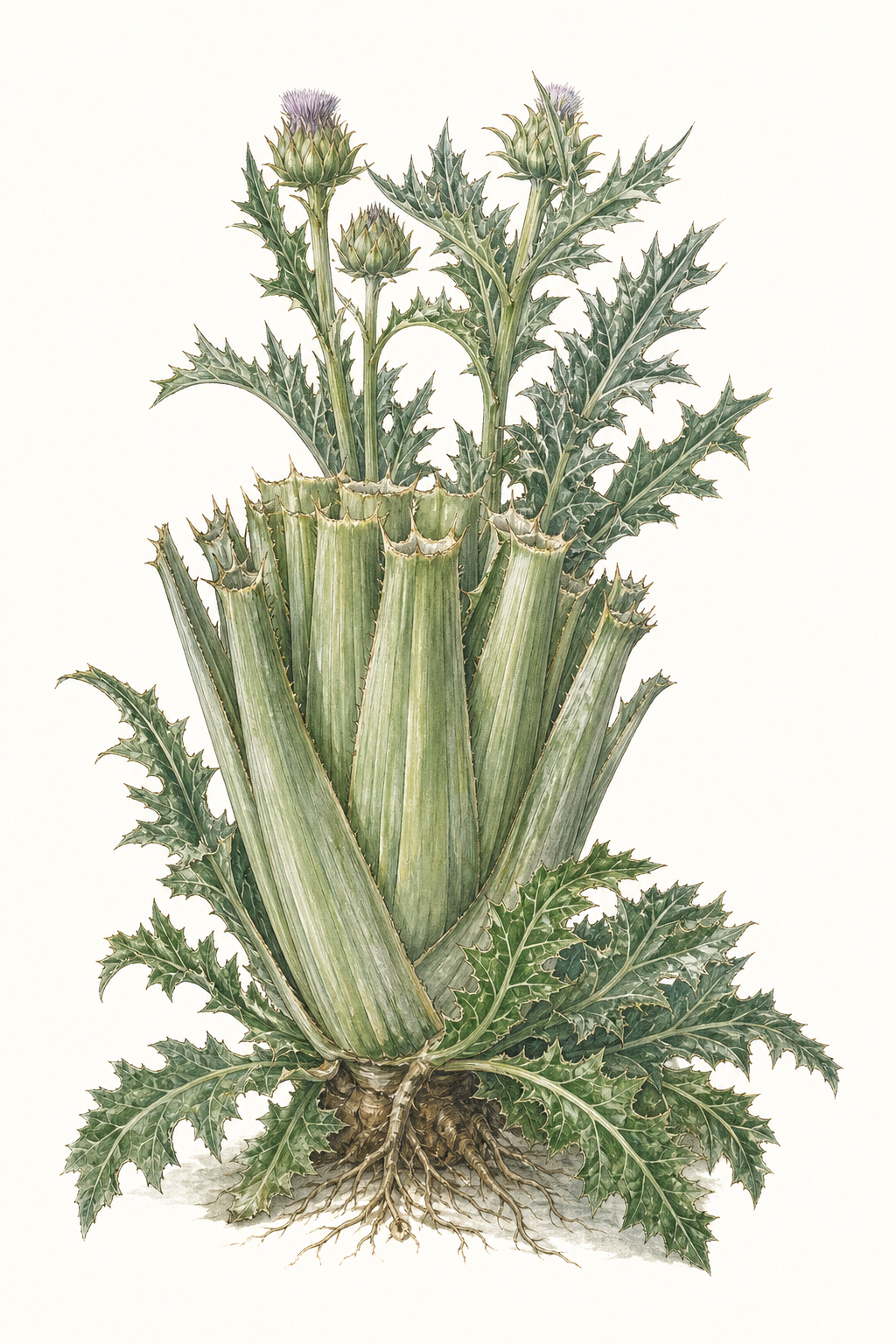
Unfurling into towering, architectural hearts, Cynara cardunculus ‘Giant’ offers a bold, artichoke-like aroma with a pleasantly b…
Crop Dates
| Milestone | Date |
|---|---|
| Start Indoors | May 4th |
| Last Frost | Jun 15th |
| Transplant / Sow Outdoors | Jun 1st |
| Harvest Begins | Sep 29th |
| Harvest Ends | Jul 15th |
Crop Details
| Trait | Value |
|---|---|
| Days to Maturity | 120 |
| Sun Requirements | Full Sun |
| Growth Habit | Clumping |
| Support Needed | None |
| Planting Depth | Normal |
| Germination Temp (°F) | 75 |
| Min Soil Temp (°F) | 45 |
| Min Night Temp (°F) | 35 |
| Harden Off (days) | 6 |
Recommended Companions
Frequently Asked Questions
What pests or diseases commonly hit Cynara scolymus (artichoke) and what can I do quickly?
How often should I water Cynara scolymus during the main growing phase?
How do I tell when Cynara scolymus is ready to harvest?
Unfurling into towering, architectural hearts, Cynara cardunculus ‘Giant’ offers a bold, artichoke-like aroma with a pleasantly bitter edge that gardeners love to tame. The thick, fleshy ribs are firm and succulent, forming large, upright clumps with a satisfying crunch and a deep, savory character ideal for roasting, braising, and transforming into rich sauces. Grow ‘Giant’ for dramatic garden presence and bountiful, platter-ready cardoon harvests at about 120 days.
Sowing Tips

Transplant Conditions
Wait until soil reaches 45°F and nights stay above 35°F before moving outdoors. Harden off for 6 days first.
Expert Note

Grow cardoon like a long-season, cool-leaning biennial: start indoors early, transplant into cool but workable soil, then blanch stalks as they mature for best tenderness.