
Earth Tones Dent
Corn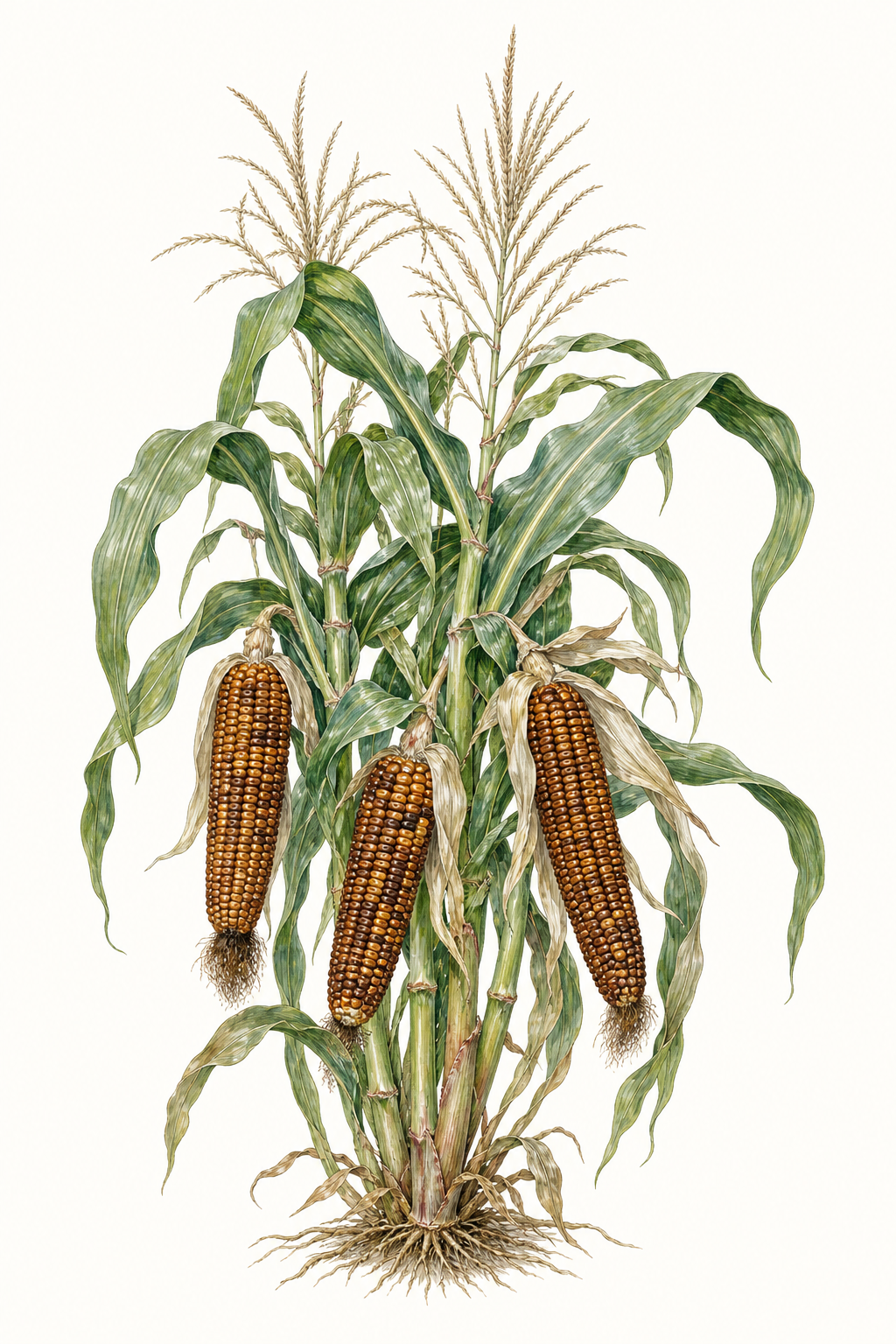
Warm, earthy kernels—tinted in russet, bronze, and dusky amber—burst with a creamy sweetness that feels almost honeyed at first t…
Crop Dates
| Milestone | Date |
|---|---|
| Start Indoors | Direct Sow |
| Last Frost | Jun 15th |
| Transplant / Sow Outdoors | Jun 15th |
| Harvest Begins | Sep 8th |
| Harvest Ends | Jul 15th |
Crop Details
| Trait | Value |
|---|---|
| Days to Maturity | 85 |
| Sun Requirements | Full Sun |
| Growth Habit | Upright |
| Support Needed | None |
| Planting Depth | Normal |
| Germination Temp (°F) | 60 |
| Min Soil Temp (°F) | 60 |
| Min Night Temp (°F) | 50 |
| Harden Off (days) | Not Required |
Recommended Companions
Frequently Asked Questions
What pest or disease is most common for sweet corn (Zea mays var. saccharata), and how do I manage it at home?
How often should I water earth-tones dent sweet corn during the main growing phase?
How can I tell when earth-tones dent sweet corn is ready to harvest?
Warm, earthy kernels—tinted in russet, bronze, and dusky amber—burst with a creamy sweetness that feels almost honeyed at first touch. Earth Tones Dent forms handsome, full ears with a gently wrinkled “dent” finish, offering a tender bite and rich, corn-forward flavor that shines in fresh, roasted, and spoonable preparations. Grow it for a living centerpiece: a sweet-corn harvest that also reads like autumn in the garden, perfect for brightening salads, salsas, and vibrant sauces.
Sowing Tips

Transplant Conditions
Wait until soil reaches 60°F and nights stay above 50°F before moving outdoors.
Expert Note

For best pollination and uniform ears, plant in a dense block (not a single row) and keep soil moisture steady from tassel through ear set.