
Rutgers VF
Tomato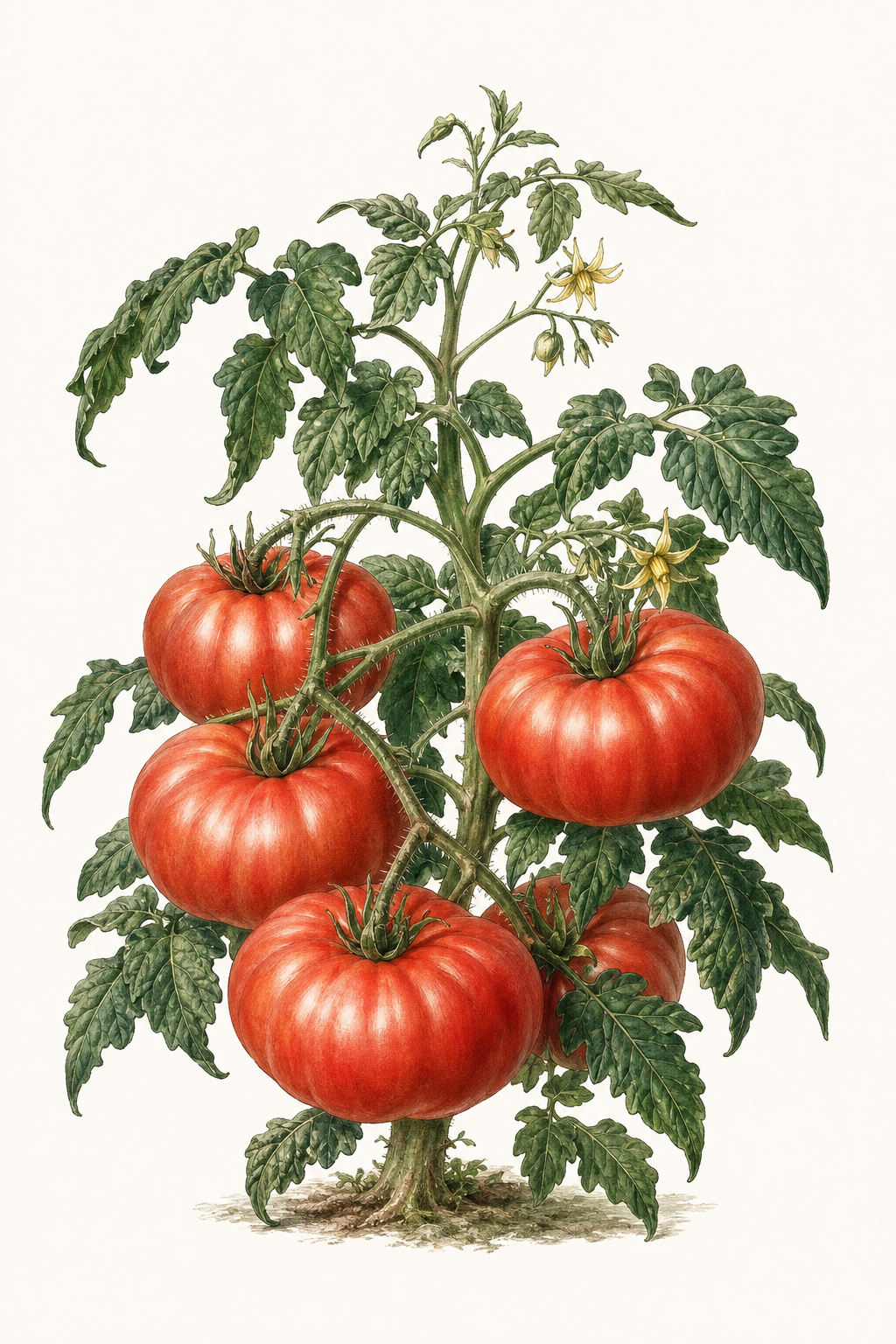
Slow to surrender and rich to the last bite, Rutgers VF brings a deep, classic tomato fragrance with a juicy, beefsteak heft. Its…
Crop Dates
| Milestone | Date |
|---|---|
| Start Indoors | Apr 27th |
| Last Frost | Jun 15th |
| Transplant / Sow Outdoors | Aug 10th |
| Harvest Begins | Nov 3rd |
| Harvest Ends | Jul 15th |
Crop Details
| Trait | Value |
|---|---|
| Days to Maturity | 85 |
| Sun Requirements | Full Sun |
| Growth Habit | Determinate |
| Support Needed | Cage |
| Planting Depth | Deep |
| Germination Temp (°F) | 75 |
| Min Soil Temp (°F) | 60 |
| Min Night Temp (°F) | 50 |
| Harden Off (days) | 8 |
Recommended Companions
Frequently Asked Questions
What pest or disease most often affects Solanum lycopersicum (tomato) plants like Rutgers VF, and what should I do?
How often should I water Rutgers VF tomato plants during the main growing phase?
How can I tell when Rutgers VF tomatoes are ready to harvest?
Slow to surrender and rich to the last bite, Rutgers VF brings a deep, classic tomato fragrance with a juicy, beefsteak heft. Its flesh is firm yet tender, with a balanced sweetness and bright, tangy snap that shines in thick sauces and hearty simmered preparations. Gardeners prize Rutgers VF for dependable performance and its strong resistance to Verticillium and Fusarium wilts—an heirloom-style favorite with modern resilience.
Sowing Tips

Transplant Conditions
Wait until soil reaches 60°F and nights stay above 50°F before moving outdoors. Harden off for 8 days first.
Expert Note

For best survival, harden seedlings fully and wait until night temperatures are reliably ~50°F+ and soil is warm before transplanting to prevent cold-soil stunting.