SproutSmart
SproutSmart Intelligent Garden Sowing

Arikara

Sunflower
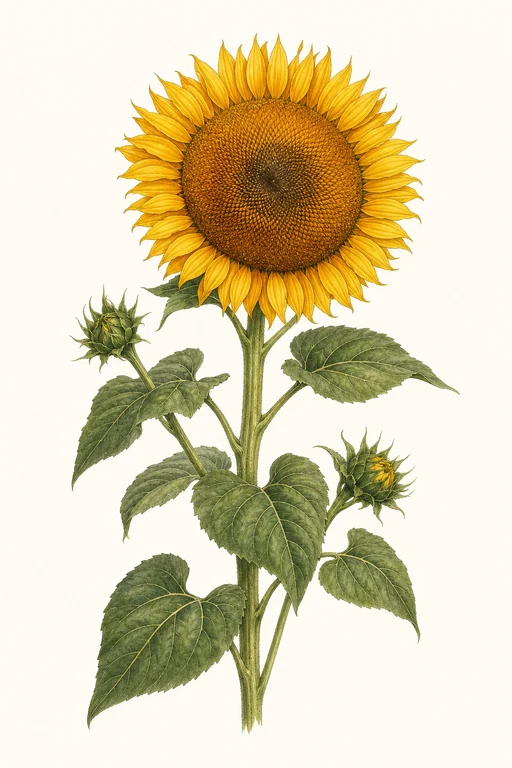
Botanical illustration of Arikara
🌱 95d to harvest Upright

Warm, golden faces rise with a regal, sun-catching presence—Arikara’s blooms bring a rich, honeyed depth of color and a sturdy, u…

Planting Schedule

Add Arikara to your garden to build a schedule and get reminders.

Crop Dates

MilestoneDate
Start IndoorsDirect Sow
Last FrostJun 1st
Transplant / Sow OutdoorsJun 1st
Harvest BeginsSep 4th
Harvest EndsAug 1st

Crop Details

TraitValue
Days to Maturity95
Sun RequirementsFull SunFull sun
Growth HabitUpright
Support NeededNone
Planting DepthNormal
Germination Temp (°F)70
Min Soil Temp (°F)55
Min Night Temp (°F)35
Harden Off (days)Not Required

Frequently Asked Questions


What pest or disease most commonly affects Helianthus annuus (sunflower), and how can I manage it?
Powdery mildew is a frequent issue on sunflower (Helianthus annuus), showing up as a white, dusty coating on leaves during warm, humid spells. Improve airflow by spacing plants properly and removing heavily infected lower leaves; water at the soil line instead of overhead to keep foliage dry. If it’s spreading, treat early with a labeled fungicide for powdery mildew on vegetables/ornamentals, following the label rate and reapplication timing.
How often should I water Helianthus annuus during the main growing phase, and what soil moisture level should I maintain?
During active growth and before seed fill, water deeply about 1–2 times per week, aiming to keep the top 2–3 inches of soil evenly moist but not soggy. In hot weather, you may need more frequent watering, but always let the soil surface dry slightly between waterings to prevent root stress. Once plants begin forming seed heads, switch to steady deep watering (roughly 1 inch per week total from rain and irrigation) to support consistent seed development.
How do I tell when Helianthus annuus is ready to harvest (seeds/heads)?
Harvest when the back of the flower head turns yellow to brown and the bracts (the “petals” around the back) are mostly dried, with the seeds appearing plump and mature. The seeds should be firm and well-developed at the edges of the head, and many should be loose enough to rub or pick without tearing the head. For best quality, cut heads and dry them further in a well-ventilated area until the seeds are fully hard.
Botanical illustration of Arikara

Warm, golden faces rise with a regal, sun-catching presence—Arikara’s blooms bring a rich, honeyed depth of color and a sturdy, upright confidence to the garden. The seeds develop in substantial, well-filled heads, offering a satisfying, nutty richness prized for seed oil and for saving as an heirloom staple. A non-GMO treasure for pollinators, Arikara rewards attentive growers with bold, long-season performance through 95 days to maturity.

Sowing Tips

Transplant Conditions

Wait until soil reaches 55°F and nights stay above 35°F before moving outdoors.

Expert Note

For best stands, sow sunflower seed directly after the danger of hard frost when soil temps are reliably warm, then thin to the final spacing for large seed heads.