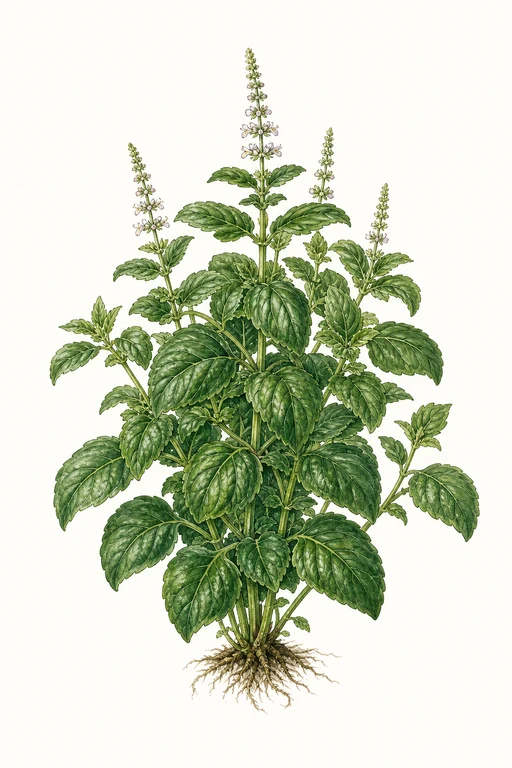
Fetzer Basil
Basil
🌱 30d to harvest
Upright
Aromatic as a sunlit greenhouse—Fetzer Basil unfurls with richly perfumed leaves that feel velvety to the touch and hold their fr…
Crop Dates
| Milestone | Date |
|---|---|
| Start Indoors | Apr 20th |
| Last Frost | Jun 1st |
| Transplant / Sow Outdoors | Jul 13th |
| Harvest Begins | Aug 12th |
| Harvest Ends | Aug 1st |
Crop Details
| Trait | Value |
|---|---|
| Days to Maturity | 30 |
| Sun Requirements | Full Sun |
| Growth Habit | Upright |
| Support Needed | None |
| Planting Depth | Normal |
| Germination Temp (°F) | 75 |
| Min Soil Temp (°F) | 60 |
| Min Night Temp (°F) | 50 |
| Harden Off (days) | 10 |
Recommended Companions
Frequently Asked Questions
What pest or disease problem is most common on Ocimum gratissimum (Holy Vana basil), and how do I control it?
Basil (Ocimum gratissimum) commonly suffers from downy mildew and leaf-spot diseases in warm, humid weather, often showing as yellow patches, gray/purple growth under leaves, or dark spots. Water the plant at the soil line (not the foliage) and increase airflow by spacing plants well; remove and discard infected leaves early. If conditions stay humid, use a labeled fungicide for downy mildew/leaf spot on edible herbs and repeat only as directed on the label.
How often should I water Ocimum gratissimum during its main growing phase?
During active growth, keep the soil consistently moist but not soggy—aim for the top 1 inch to dry slightly between waterings. In full sun, this often means watering every 2–3 days for groundbeds and daily or every other day for containers, depending on heat and pot size. Avoid waterlogging, because overly wet soil encourages root issues and boosts mildew risk.
How can I tell when Ocimum gratissimum (Fetzer basil) is ready to harvest?
Harvest once plants reach about 6–8 inches tall and have several sets of healthy leaves, typically around 30 days from sowing for this crop. Start by pinching or cutting the top 1/3 of the plant just above a leaf pair to encourage branching; you’ll get the best flavor on young, tender leaves. If leaves become tough or the plant starts producing flower stalks, harvest more frequently to maintain quality.