SproutSmart
SproutSmart Intelligent Garden Sowing

Marmalade

Black-eyed Susan

Planting Schedule

Add Marmalade to your garden to build a schedule and get reminders.
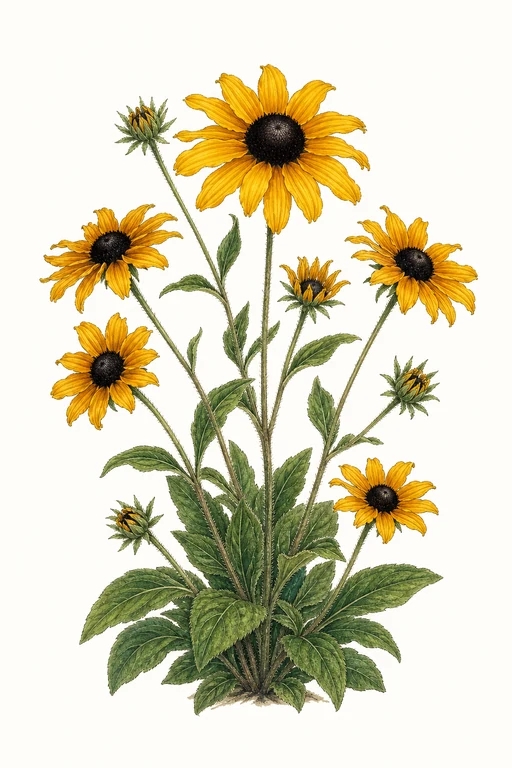
Botanical illustration of Marmalade
90d to harvest

Sun-warmed petals blaze in rich marmalade-gold, radiating outward from a velvety, near-black center that holds the eye like a lantern in late summer. Marmalade forms sturdy clumps with a crisp, daisy-like texture—bold, slightly tousled rays over deep, green foliage—making it as striking in the garden as it is in fresh bouquets. Grow Marmalade for long-lasting color through the season, where its classic black “eye” and generous blooms bring instant cheer to borders and pollinator paths.

Crop Dates

Growing note: Zone 1b has only 61 frost-free days — shorter than this crop's 90-day maturity. Outdoor planting is not viable; use protected cultivation.
MilestoneDate
Last FrostJun 1st
Growing ApproachProtected Environment Only

Crop Details

TraitValue
Days to Maturity90
Sun RequirementsFull SunFull sun
Growth HabitUpright
Support NeededNone
Planting DepthNormal
Germination Temp (°F)70
Min Soil Temp (°F)45
Min Night Temp (°F)40
Harden Off (days)7

Frequently Asked Questions


What pest or disease most commonly affects Rudbeckia hirta (marmalade), and how can I treat it?
Rudbeckia hirta commonly gets powdery mildew in humid weather, showing as a white, dusty coating on leaves. Remove heavily infected leaves early, improve airflow by spacing plants, and water at the base to keep foliage dry. If it’s spreading, spray an approved powdery mildew fungicide and repeat as directed on the label (avoid spraying in peak sun to prevent leaf burn).
How often should I water Rudbeckia hirta during its main growing phase?
During active growth and bud formation, keep soil consistently moist but not soggy—water when the top 1 inch of soil feels dry. Aim for deep watering so moisture reaches the root zone, typically about once or twice per week depending on heat and rainfall. Once established, you can reduce frequency, but don’t let the soil fully dry out for extended periods while it’s flowering.
Botanical illustration of Marmalade

Sun-warmed petals blaze in rich marmalade-gold, radiating outward from a velvety, near-black center that holds the eye like a lantern in late summer. Marmalade forms sturdy clumps with a crisp, daisy-like texture—bold, slightly tousled rays over deep, green foliage—making it as striking in the garden as it is in fresh bouquets. Grow Marmalade for long-lasting color through the season, where its classic black “eye” and generous blooms bring instant cheer to borders and pollinator paths.