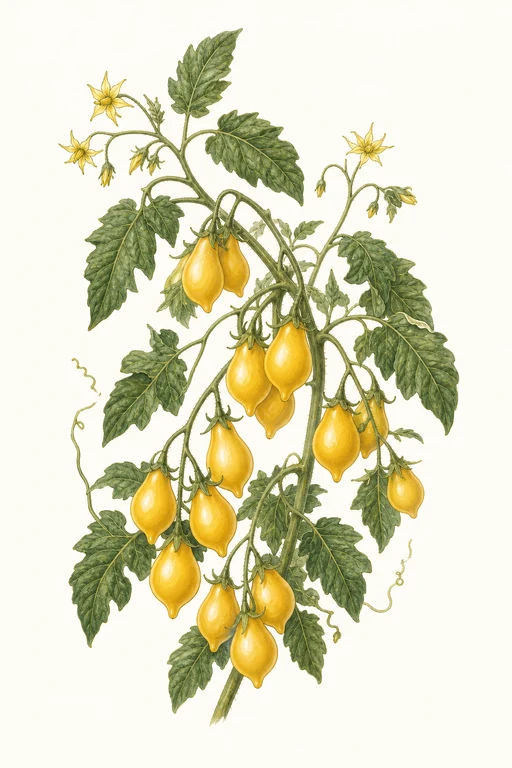
Yellow Pear
60d to harvest
Sunlit and sweet-tart, Yellow Pear cherry tomatoes ripen to a buttery golden pear shape that glows against the foliage. Their skin is thin and glossy, with a juicy, tender bite and a bright, tangy flavor that makes them irresistible straight from the vine. Grow Yellow Pear for abundant clusters of warm-weather fruit—ideal for fresh snacking, vibrant salads, and quick, colorful sauces that showcase their mellow sweetness.
Crop Dates
| Milestone | Date |
|---|---|
| Start Indoors | Apr 13th |
| Last Frost | Jun 1st |
| Transplant / Sow Outdoors | Jul 27th |
| Harvest Begins | Sep 25th |
| Harvest Ends | Aug 1st |
Crop Details
| Trait | Value |
|---|---|
| Days to Maturity | 60 |
| Sun Requirements | Full Sun |
| Growth Habit | Indeterminate |
| Support Needed | Cage |
| Planting Depth | Deep |
| Germination Temp (°F) | 70 |
| Min Soil Temp (°F) | 60 |
| Min Night Temp (°F) | 50 |
| Harden Off (days) | 10 |
Recommended Companions
Frequently Asked Questions
Yellow pear (Solanum lycopersicum) — what’s a common disease/pest problem and how do I treat it?
A very common issue for tomato types like yellow pear is early blight (brown, concentric spots on older leaves) and it spreads fast in humid weather. Remove and discard infected leaves immediately, avoid wetting foliage when watering, and apply a labeled fungicide for tomatoes if spots are spreading. Watch also for hornworms and hand-pick them early in the season, then check undersides of leaves regularly.
How often should I water yellow pear tomatoes during the main growing phase?
During flowering and fruiting (roughly weeks 4–8 for a ~60-day crop), keep the soil evenly moist with about 1 to 1.5 inches of water per week. Water deeply when the top 1 inch of soil dries out, because uneven moisture can trigger blossom-end rot and fruit cracking. Use consistent watering (not daily small splashes) to maintain steady moisture around developing trusses.
How can I tell when my yellow pear tomatoes are ready to harvest?
Harvest when fruits are fully colored (bright yellow), firm but not hard, and easily detach with a gentle twist. If you see a slight softening at the blossom end and the fruit has reached full size, it’s typically ready. Pick frequently during peak production so new clusters keep ripening on schedule.