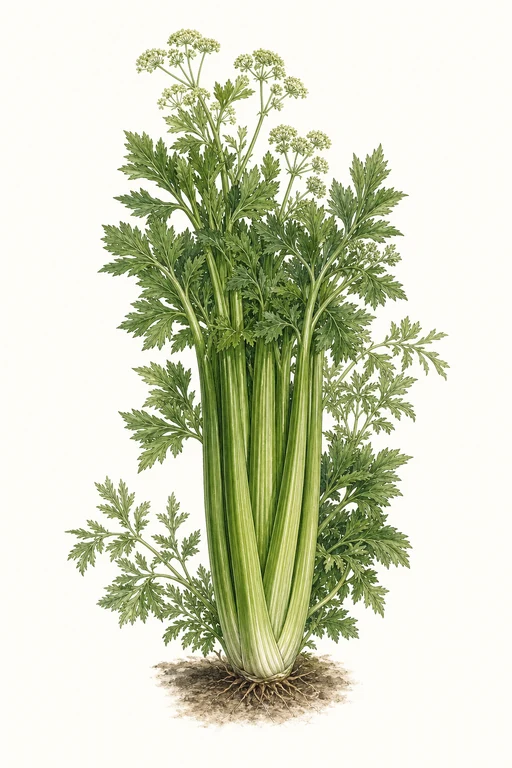
Utah
Celery
🌱 90d to harvest
Rosette
Crisp, cool stalks with a clean, celery-bright snap—Utah brings a refined, tender bite and a pleasantly mild, herbal flavor that …
Crop Dates
| Milestone | Date |
|---|---|
| Start Indoors | Mar 6th |
| Last Frost | May 15th |
| Transplant / Sow Outdoors | May 1st |
| Harvest Begins | Jul 30th |
| Harvest Ends | Aug 25th |
Crop Details
| Trait | Value |
|---|---|
| Days to Maturity | 90 |
| Sun Requirements | Part Sun |
| Growth Habit | Rosette |
| Support Needed | None |
| Planting Depth | Normal |
| Germination Temp (°F) | 70 |
| Min Soil Temp (°F) | 40 |
| Min Night Temp (°F) | 35 |
| Harden Off (days) | 6 |
Recommended Companions
Frequently Asked Questions
What pests or diseases commonly affect Apium graveolens var. dulce (Utah celery), and how can I control them?
Celery is prone to early blight/Septoria leaf spot and to aphids during warm spells. Remove and discard infected outer leaves early, water at the base (not overhead), and improve airflow between plants; for aphids, spray a strong jet of water to dislodge them and spot-treat with insecticidal soap if infestations persist. Keep weeds down because they host pests and increase humidity around celery foliage.
How often should I water Utah celery during active growth, and what soil moisture level should I maintain?
During the 60–90 day growing window, keep soil consistently moist but not waterlogged—aim for evenly damp soil 1–2 inches down. Water deeply about 2–3 times per week in typical conditions, and increase frequency during heat or windy periods so the soil never dries out completely. Mulch helps maintain steady moisture, which reduces bitterness and hollow, weak stalks.
How do I tell when Apium graveolens var. dulce (Utah celery) is ready to harvest?
Harvest at about 90 days when stalks are firm, full-sized, and reach the expected height for your spacing, with leaves that look dense and healthy. Use a “thickness” check: stalks should feel solid rather than stringy, and blanching (if you do it) should produce a paler, more tender stem base. Start harvesting in stages—cut outer stalks first while the center continues to thicken.