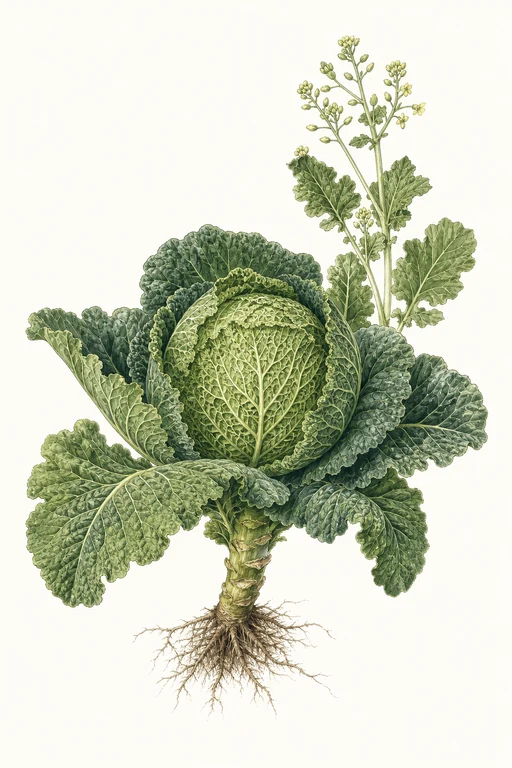
Des Vertus Savoy
75d to harvest
Unfurl Des Vertus Savoy and savor the sight—and the promise—of its tightly layered, deeply crinkled leaves, cool as velvet and richly aromatic. At maturity, heads form a firm, elegant globe with a gentle, sweet cabbage flavor and a tender, springy texture that holds its character beautifully for classic garden use. Ideal for hearty braises and slow-simmered preparations, this Savoy cabbage brings a refined, crinkled beauty to the table from the first harvest through the last leaves.
Crop Dates
| Milestone | Date |
|---|---|
| Start Indoors | Apr 17th |
| Last Frost | May 15th |
| Transplant / Sow Outdoors | May 15th |
| Harvest Begins | Jul 29th |
| Harvest Ends | Sep 1st |
Crop Details
| Trait | Value |
|---|---|
| Days to Maturity | 75 |
| Sun Requirements | Full Sun |
| Growth Habit | Rosette |
| Support Needed | None |
| Planting Depth | Normal |
| Germination Temp (°F) | 70 |
| Min Soil Temp (°F) | 45 |
| Min Night Temp (°F) | 32 |
| Harden Off (days) | 6 |
Recommended Companions
Frequently Asked Questions
How often should I water Savoy cabbage during the main growth phase?
During head formation (roughly after the plant is well established), keep the soil consistently evenly moist but never waterlogged—aim for about 1 inch (2.5 cm) of water per week, adjusted for rainfall and heat. Sandy soil may need more frequent watering (smaller amounts), while heavier soils may need less; check by pushing a finger 1–2 inches into the soil—water when it feels dry at that depth. Mulch helps prevent the moisture swings that can lead to loose heads and split or stressed foliage.
How do I know when Des Vertus Savoy (Brassica oleracea var. capitata) is ready to harvest?
Harvest when the heads feel firm and compact and the outer leaves look fully grown but still fresh-green (generally around 75 days from sowing, depending on your start method). A good test is to gently squeeze the head—if it compresses slightly but doesn’t feel soft, it’s ready; if it feels tight and rigid, pick promptly. Cut the head with a sharp knife at the base, leaving a few wrapper leaves to protect the surface.