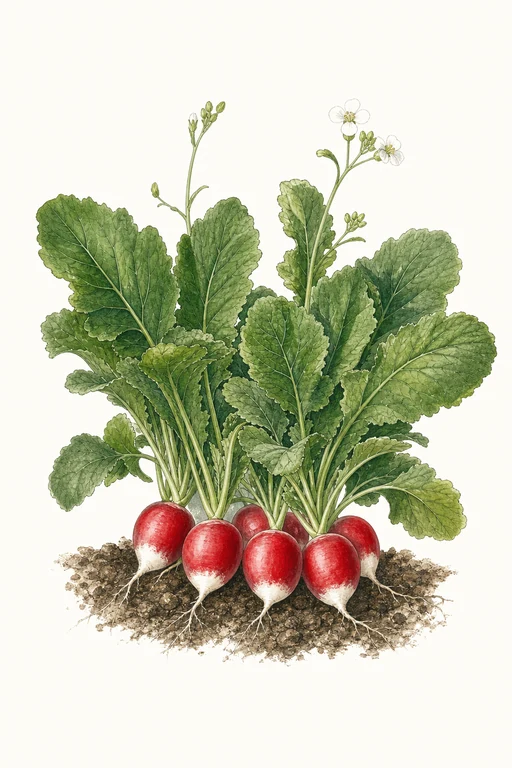
Rudolf
Radish
🌱 25d to harvest
Taproot
Crisp as fresh-cut glass, Rudolf radishes arrive in just 25 days with a clean, bright bite and a delicately sweet finish. Their s…
Crop Dates
| Milestone | Date |
|---|---|
| Start Indoors | Direct Sow |
| Last Frost | May 15th |
| Transplant / Sow Outdoors | May 15th |
| Harvest Begins | Jun 9th |
| Harvest Ends | Sep 1st |
Crop Details
| Trait | Value |
|---|---|
| Days to Maturity | 25 |
| Sun Requirements | Full Sun |
| Growth Habit | Taproot |
| Support Needed | None |
| Planting Depth | Normal |
| Germination Temp (°F) | 55 |
| Min Soil Temp (°F) | 40 |
| Min Night Temp (°F) | 28 |
| Harden Off (days) | Not Required |
Recommended Companions
Frequently Asked Questions
What pest or disease commonly affects radish (Raphanus sativus), and how can I stop it?
Watch for flea beetles, which chew small holes in radish leaves and can stunt fast-growing seedlings. Cover newly sown beds with a lightweight row cover until plants are established, and keep the soil consistently slightly moist (drought makes plants harder to recover). If you see powdery mildew-like spotting, remove heavily affected leaves promptly and avoid wetting foliage—radishes are quick, so improving airflow and hygiene helps before harvest.
How often should I water radish (Raphanus sativus) during the main growing phase?
Water to keep the top 1–2 inches of soil evenly moist from sowing through bulbing, usually about 1 inch per week total in warm weather, split into 2–3 waterings. If the soil dries then suddenly gets wet, radishes are more likely to turn woody or split—aim for steady moisture. Check by feel: the soil should crumble slightly, not stay soggy.
How do I tell when radish (Raphanus sativus) is ready to harvest?
Start checking at about 20–25 days after sowing, because radishes become pithy if left too long. Harvest when the roots are fully sized and feel firm when gently pulled or pressed near the soil line, with the tops still green and healthy. If the roots look elongated or the bulbs are hard to develop, pull promptly and harvest a little earlier next time for a better texture.