
Javelin
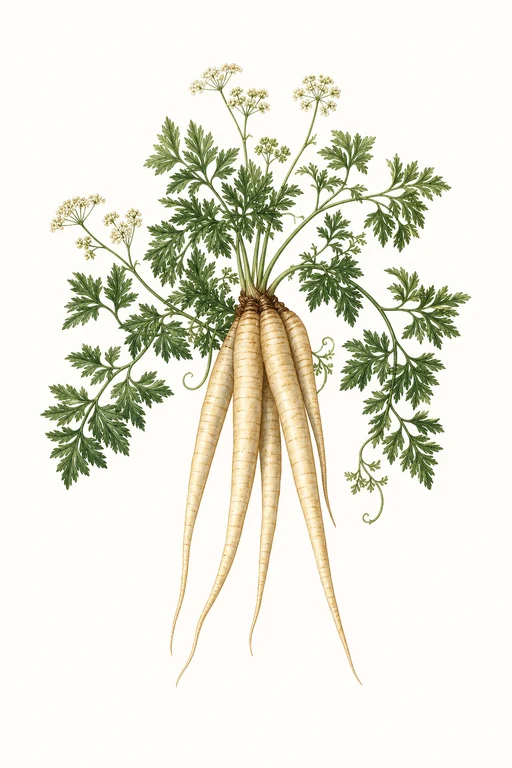
Sweet and luminous, Javelin parsnips develop a creamy, honeyed depth with a tender bite and a smooth, satiny surface that feels almost polished in the hand. At maturity, the long, spear-shaped roots hold their flavor beautifully—ideal for roasting until caramel-kissed, simmering into silky purées, or grating into rich sauces and hearty soups. Grow Javelin for a dependable 110-day season and a harvest that’s as satisfying to display as it is to savor.
Crop Dates
| Milestone | Date |
|---|---|
| Start Indoors | Direct Sow |
| Last Frost | May 19th |
| Transplant / Sow Outdoors | May 19th |
| Harvest Begins | Sep 6th |
| Harvest Ends | Sep 21st |
Crop Details
| Trait | Value |
|---|---|
| Days to Maturity | 110 |
| Sun Requirements | Full Sun |
| Growth Habit | Taproot |
| Support Needed | None |
| Planting Depth | Normal |
| Germination Temp (°F) | 50 |
| Min Soil Temp (°F) | 40 |
| Min Night Temp (°F) | 28 |
| Harden Off (days) | Not Required |
Recommended Companions

Frequently Asked Questions
What’s the most common disease problem for Pastinaca sativa (parsnip) called “Javelin,” and how do I manage it?
During the main growing phase, how often should I water Pastinaca sativa (parsnip) “Javelin,” and what soil moisture level should I maintain?
Sweet and luminous, Javelin parsnips develop a creamy, honeyed depth with a tender bite and a smooth, satiny surface that feels almost polished in the hand. At maturity, the long, spear-shaped roots hold their flavor beautifully—ideal for roasting until caramel-kissed, simmering into silky purées, or grating into rich sauces and hearty soups. Grow Javelin for a dependable 110-day season and a harvest that’s as satisfying to display as it is to savor.
Sowing Tips

Transplant Conditions
Wait until soil reaches 40°F and nights stay above 28°F before moving outdoors.
Expert Note

Parsnip seed is slow and can be erratic—keep the bed evenly moist until emergence and thin to proper spacing once seedlings are established.