SproutSmart
SproutSmart Intelligent Garden Sowing

Spanish Black

Radish
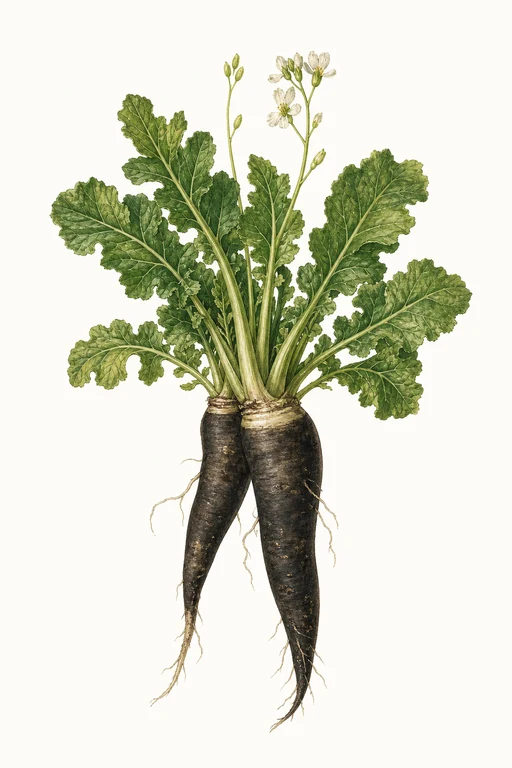
Botanical illustration of Spanish Black
🌱 70d to harvest Rosette

Sink your senses into Spanish Black’s velvety, ink-dark roots—deep as polished slate—set beneath a crown of crisp green leaves. T…

Planting Schedule

Add Spanish Black to your garden to build a schedule and get reminders.

Crop Dates

MilestoneDate
Start IndoorsDirect Sow
Last FrostMay 19th
Transplant / Sow OutdoorsMay 19th
Harvest BeginsJul 28th
Harvest EndsSep 21st

Crop Details

TraitValue
Days to Maturity70
Sun RequirementsFull SunFull sun
Growth HabitRosette
Support NeededNone
Planting DepthNormal
Germination Temp (°F)45
Min Soil Temp (°F)40
Min Night Temp (°F)28
Harden Off (days)Not Required

Frequently Asked Questions


Why are my Raphanus sativus (Spanish Black radish) leaves getting pale, mottled, and distorted, and what can I do?
This pattern is often caused by aphids or flea beetles spreading stress damage, and it can quickly worsen in warm spells. Check the undersides of leaves twice a week and knock aphids off with a strong water spray, then cover seedlings with an insect net or row cover to block further feeding. If damage is severe, remove heavily infested plants promptly to reduce spread and restart under cover for the next sowing.
How often should I water Spanish Black radish during active root growth to prevent cracking or pithiness?
During the main growth period (roughly weeks 3–8), keep soil consistently evenly moist, about 1 inch (2.5 cm) of water per week depending on rainfall and heat. Water deeply after the top 1 inch (2.5 cm) dries, rather than frequent light sprinkling, to encourage steady root thickening. Uneven watering—especially swings from dry to wet—commonly leads to splitting or hollow/pithy roots.
When is Spanish Black radish (Raphanus sativus) ready to harvest, and how can I confirm it?
Harvest at about 70 days from sowing (often a bit earlier if roots size up sooner), when the roots are firm and reach the typical mature size for your seed packet. Lift one plant to check: the skin should be fully colored (black outside) with a crisp, firm interior when you cut it. If roots are left too long, they can become woody or develop a stronger bite.
Botanical illustration of Spanish Black

Sink your senses into Spanish Black’s velvety, ink-dark roots—deep as polished slate—set beneath a crown of crisp green leaves. The flesh is clean and bright, with a refreshing bite that turns mellow and sweet when roasted, and stays lively for fresh slicing. Grow Spanish Black for bold flavor in root-forward dishes, for roasting trays, and for striking pickles that showcase its dramatic color from garden to jar.

Sowing Tips

Transplant Conditions

Wait until soil reaches 40°F and nights stay above 28°F before moving outdoors.

Expert Note

Black radish forms best with steady moisture—avoid letting it dry out or it can get woody and overly pungent.