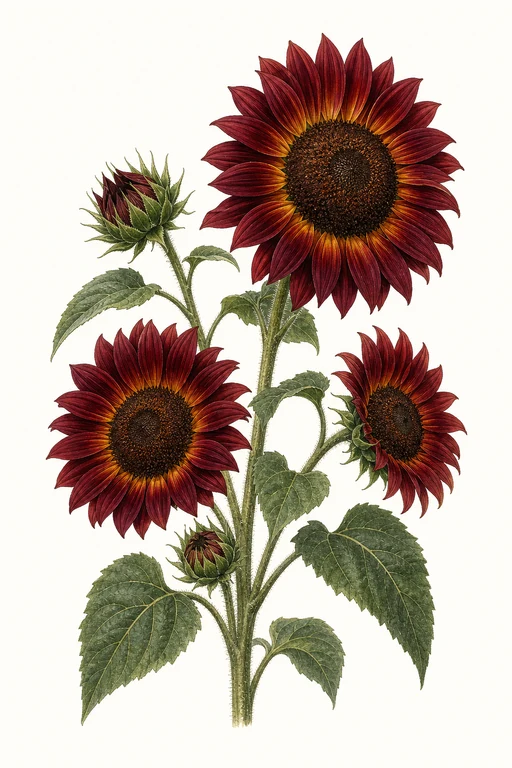
Chianti
Sunflower
🌱 70d to harvest
Upright
Velvety, wine-kissed petals unfurl in bold, sun-facing heads—Chianti brings a dramatic blend of warm amber and deep garnet tones …
Crop Dates
| Milestone | Date |
|---|---|
| Start Indoors | Direct Sow |
| Last Frost | May 8th |
| Transplant / Sow Outdoors | May 8th |
| Harvest Begins | Jul 17th |
| Harvest Ends | Sep 30th |
Crop Details
| Trait | Value |
|---|---|
| Days to Maturity | 70 |
| Sun Requirements | Full Sun |
| Growth Habit | Upright |
| Support Needed | None |
| Planting Depth | Normal |
| Germination Temp (°F) | 70 |
| Min Soil Temp (°F) | 55 |
| Min Night Temp (°F) | 40 |
| Harden Off (days) | Not Required |
Recommended Companions
Frequently Asked Questions
What pest or disease problem is most common on Helianthus annuus (sunflower) and how can I control it?
Sunflowers (Helianthus annuus) are commonly hit by sunflower rust (Puccinia helianthi), which shows up as yellow spots that turn into rusty-orange pustules on leaves. Remove and discard heavily affected leaves early, improve airflow by spacing plants, and avoid overhead watering so foliage stays dry. If it’s spreading fast, use a labeled fungicide for rust on sunflowers and repeat according to the label during warm, humid weather when rust peaks.
How often should I water Chianti sunflowers during the main growing phase?
During the main growth phase (after establishment and leading up to bloom), keep soil evenly moist but not soggy—aim for watering when the top 1–2 inches of soil dry out. Typically this means about 1 inch of water per week from rainfall plus irrigation, increasing slightly during hot, windy periods. If leaves wilt in the afternoon but perk up overnight, water deeply; if the soil stays wet and leaves stay yellow or droop, cut back to prevent root stress and fungal issues.
How do I tell when Chianti (Helianthus annuus) is ready to harvest?
Harvest when the back of the flower head turns yellow to brown and the outer petals have mostly died back. For seed harvest, check that the bracts are dry and tight and that the seeds feel firm; you should see a mature seed color typical for the variety while the head is still attached. Cut the heads in the morning and dry them further in a well-ventilated, dry area before removing seeds fully.