
Dwarf Cherry Rose Jewel
Nasturtium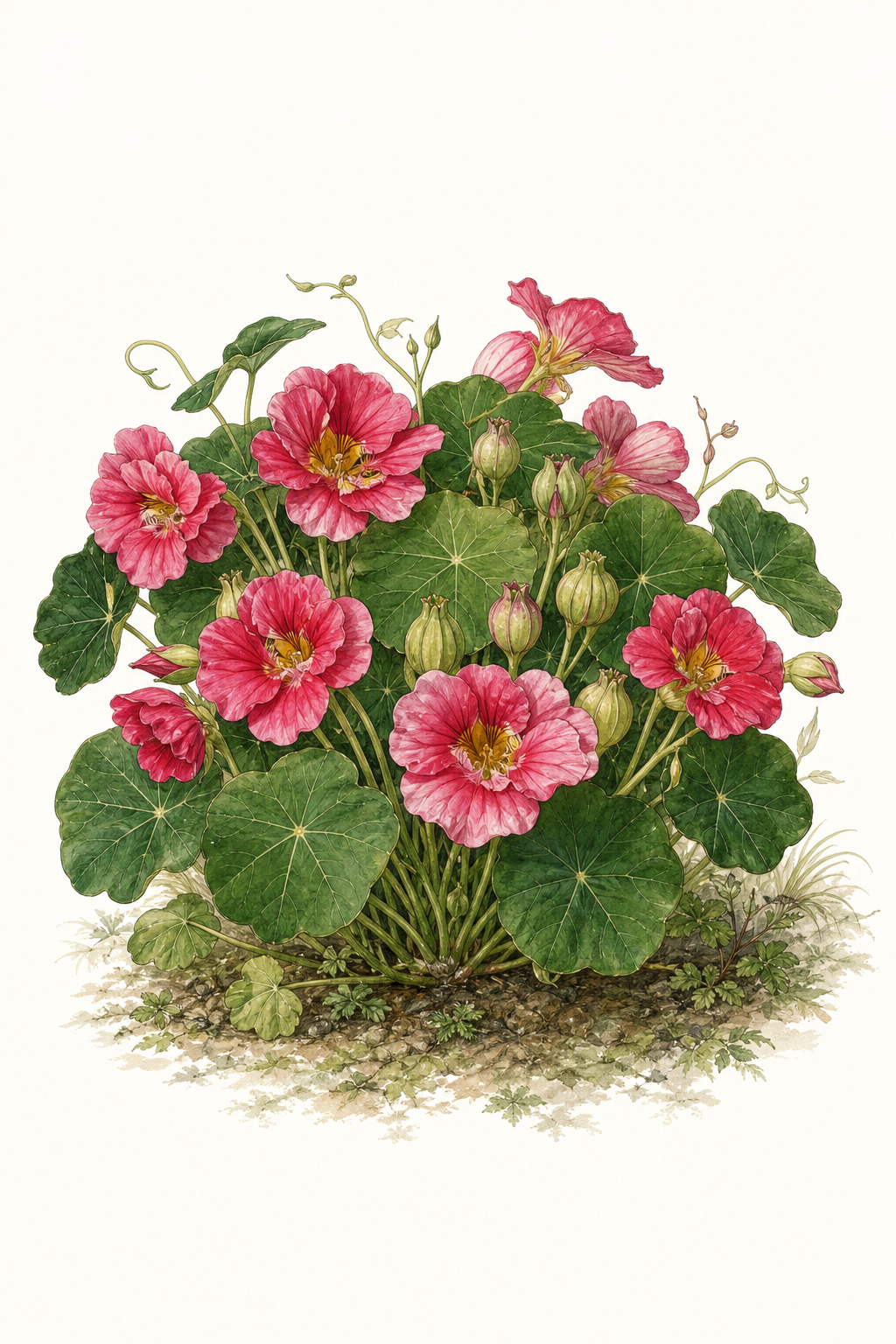
Fragrant, jewel-bright blooms—rose-pink to warm cherry-red with velvety petals—rise above a compact mound, releasing a peppery pe…
Crop Dates
| Milestone | Date |
|---|---|
| Start Indoors | Direct Sow |
| Last Frost | May 8th |
| Transplant / Sow Outdoors | May 8th |
| Harvest Begins | Jun 12th |
| Harvest Ends | Sep 30th |
Crop Details
| Trait | Value |
|---|---|
| Days to Maturity | 35 |
| Sun Requirements | Full Sun |
| Growth Habit | Bush |
| Support Needed | None |
| Planting Depth | Normal |
| Germination Temp (°F) | 70 |
| Min Soil Temp (°F) | 50 |
| Min Night Temp (°F) | 40 |
| Harden Off (days) | Not Required |
Recommended Companions
Frequently Asked Questions
What pest or disease problem affects Tropaeolum majus (Jewel/Dwarf Cherry Rose Jewel), and how can I control it?
How often should I water Tropaeolum majus during its main growing phase?
How do I tell when Dwarf Cherry Rose Jewel (Tropaeolum majus) is ready to harvest?
Fragrant, jewel-bright blooms—rose-pink to warm cherry-red with velvety petals—rise above a compact mound, releasing a peppery perfume that feels both vivid and alive. Dwarf Cherry Rose Jewel forms tender, crisp leaves and succulent seed pods with a lively, tangy bite, perfect for adding color and zing to fresh arrangements and garnishes. Grow it for its quick 35-day payoff and its nonstop show: a compact nasturtium that delivers beauty first, with flavor that follows at every glance.
Sowing Tips

Transplant Conditions
Wait until soil reaches 50°F and nights stay above 40°F before moving outdoors.
Expert Note

Sow nasturtium directly after frost danger passes (warm soil) for the best success—roots resent transplanting.