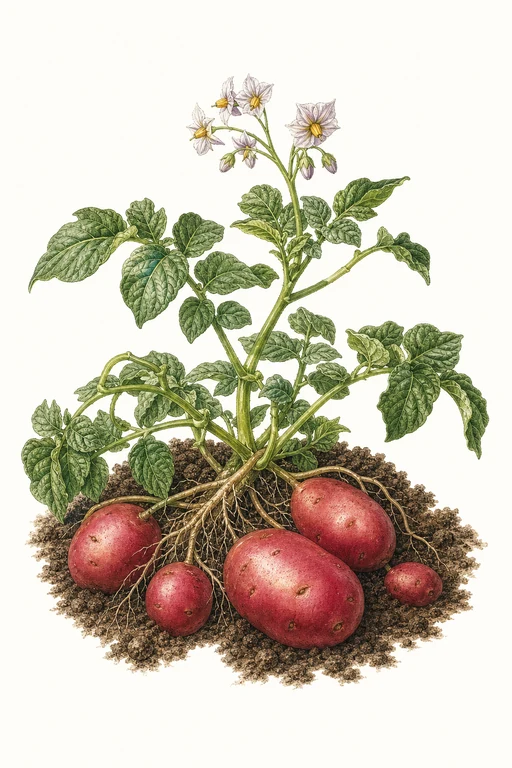
Pontiac
95d to harvest
Velvety-skinned and richly colored, Pontiac delivers an inviting blush of red over smooth, firm flesh—an elegant tuber that feels substantial in the hand. Expect a creamy, golden interior with a dependable, all-purpose bite that shines for roasting and pan-frying, and also performs beautifully for mashing and hearty stews. From planting to harvest, Pontiac’s steady rhythm makes it a satisfying choice for gardeners who want dependable performance and standout color in the cellar.
Crop Dates
| Milestone | Date |
|---|---|
| Start Indoors | Direct Sow |
| Last Frost | May 8th |
| Transplant / Sow Outdoors | May 8th |
| Harvest Begins | Aug 11th |
| Harvest Ends | Sep 30th |
Crop Details
| Trait | Value |
|---|---|
| Days to Maturity | 95 |
| Sun Requirements | Full Sun |
| Growth Habit | Clumping |
| Support Needed | None |
| Planting Depth | Normal |
| Germination Temp (°F) | 50 |
| Min Soil Temp (°F) | 45 |
| Min Night Temp (°F) | 35 |
| Harden Off (days) | Not Required |
Recommended Companions
Frequently Asked Questions
What pest or disease is most common on Solanum tuberosum (potatoes) and how do I manage it?
Early blight (Alternaria) and late blight are the most frequent potato diseases, especially when days are warm and nights are damp. Inspect weekly for brown, concentric leaf spots (early blight) or fast-spreading dark, water-soaked lesions (late blight), and remove affected tops before the disease spreads through the bed. Keep foliage dry by watering at the soil line, improve spacing/airflow, and rotate out of Solanaceae beds for at least 2–3 years; if late blight is present locally, use labeled preventative fungicide early according to label directions.
How can I tell when my Pontiac potatoes are ready to harvest (Solanum tuberosum, ~95 days)?
Check plant maturity by counting from planting (Pontiac typically fits the ~95-day window) and by observing plant dieback—vines should start yellowing and dying back. For a “new potato” harvest, dig lightly earlier, but for full-size tubers wait until most foliage has naturally died back and the skins are firm enough to resist rubbing off gently. Dig carefully with a fork to avoid cuts, then cure in a cool, airy place for 1–2 weeks before storage.