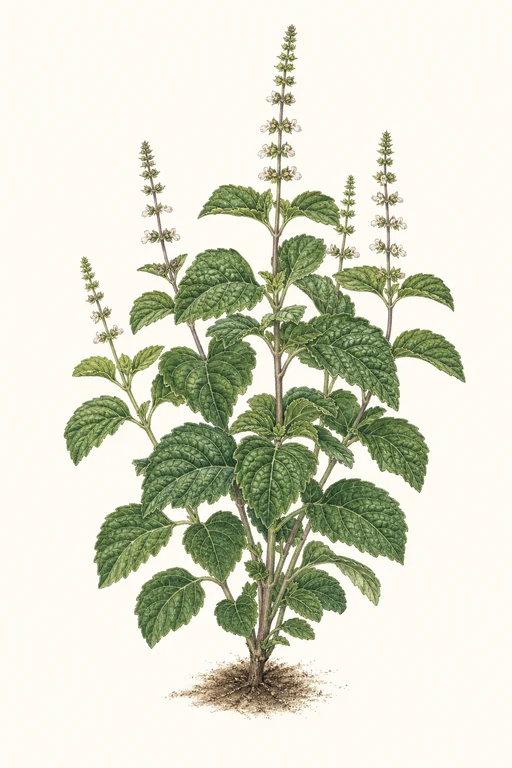
Vana Tulsi
Basil
🌱 60d to harvest
Upright
Aromatic and boldly fragrant, Vana Tulsi fills the garden with a deep, resinous basil perfume—cool minty lift with a warm, herbal…
Crop Dates
| Milestone | Date |
|---|---|
| Start Indoors | Mar 27th |
| Last Frost | May 8th |
| Transplant / Sow Outdoors | Jun 19th |
| Harvest Begins | Aug 18th |
| Harvest Ends | Sep 30th |
Crop Details
| Trait | Value |
|---|---|
| Days to Maturity | 60 |
| Sun Requirements | Full Sun |
| Growth Habit | Upright |
| Support Needed | None |
| Planting Depth | Normal |
| Germination Temp (°F) | 70 |
| Min Soil Temp (°F) | 60 |
| Min Night Temp (°F) | 50 |
| Harden Off (days) | 10 |
Recommended Companions
Frequently Asked Questions
What pest or disease most often affects Ocimum gratissimum (vana tulsi), and how do I control it?
Watch for leaf spots and downy-like issues that flare in humid conditions, plus aphids that cluster on new growth. Remove badly spotted leaves early and improve airflow by spacing plants; water at the base in the morning to keep foliage dry. If you see heavy aphids, rinse them off with a strong jet of water and repeat after 2–3 days until new shoots stop curling or discoloring.
How often should I water Ocimum gratissimum during its main growing phase?
During active growth (roughly weeks 2–8), keep the top 1–2 inches of soil lightly moist but never soggy. In warm weather, this usually means watering about 1–2 times per week depending on container vs. ground conditions; check moisture before watering by feel. When the plant is established and flowering starts, reduce slightly so the soil dries a bit between waterings, which helps prevent fungal leaf problems.
How can I tell when Ocimum gratissimum (vana tulsi) is ready to harvest?
Start harvesting when plants reach about 8–12 inches tall and have multiple healthy sets of leaves, typically around 50–60 days from planting. For best leaf quality, pick just above a leaf pair to encourage branching, and harvest in the morning when leaves are turgid and strongly aromatic. Avoid stripping more than about one-third of the plant at a time so it can keep producing through successive cuts.