
Charentais Melon
Melon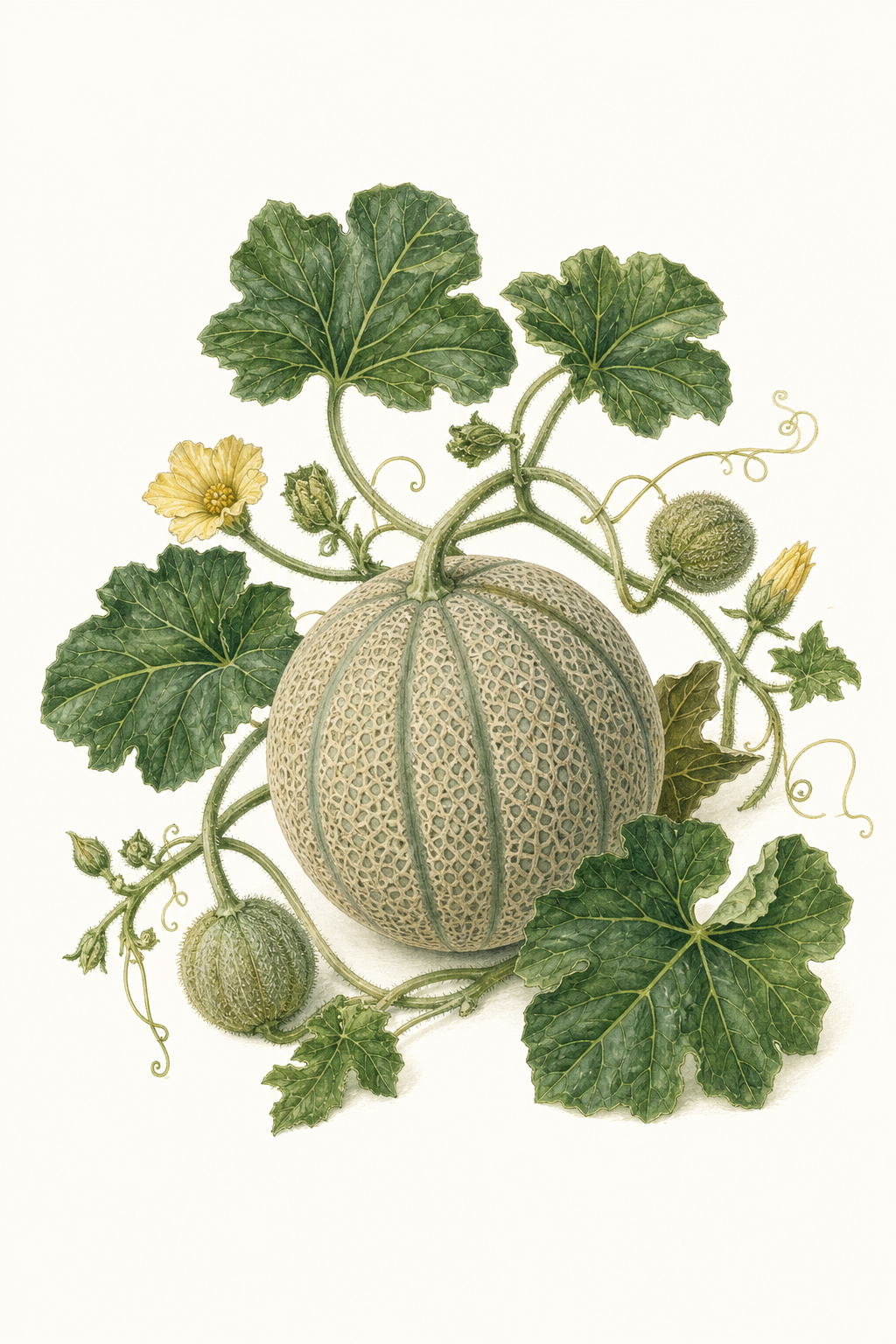
Sun-warmed fragrance rises first—Charentais Melon offers a honeyed, floral sweetness with a tender, melt-in-the-mouth flesh that …
Crop Dates
| Milestone | Date |
|---|---|
| Start Indoors | May 18th |
| Last Frost | May 4th |
| Transplant / Sow Outdoors | Jun 1st |
| Harvest Begins | Aug 20th |
| Harvest Ends | Oct 5th |
Crop Details
| Trait | Value |
|---|---|
| Days to Maturity | 80 |
| Sun Requirements | Full Sun |
| Growth Habit | Vine |
| Support Needed | Trellis |
| Planting Depth | Normal |
| Germination Temp (°F) | 85 |
| Min Soil Temp (°F) | 65 |
| Min Night Temp (°F) | 55 |
| Harden Off (days) | 12 |
Recommended Companions
Frequently Asked Questions
What pest is most likely to attack Charentais melon (Cucumis melo), and how can I control it at home?
How often should I water Charentais melon during the main growing phase, and what soil moisture target should I aim for?
How do I tell when Charentais melon (Cucumis melo) is ready to harvest?
Sun-warmed fragrance rises first—Charentais Melon offers a honeyed, floral sweetness with a tender, melt-in-the-mouth flesh that turns luxuriously juicy at peak ripeness. Its compact, round fruit wears a softly netted rind over a creamy, salmon-tinged interior, making each slice feel like a small summer celebration. Grow for specialty-market flavor: prized for fresh enjoyment and for show-stopping fruit-forward desserts, salads, and elegant spoonable preparations.
Sowing Tips

Transplant Conditions
Wait until soil reaches 65°F and nights stay above 55°F before moving outdoors. Harden off for 12 days first.

Direct Sow Preferred
Sensitive roots — does not transplant well. If starting indoors, use biodegradable pots and disturb roots as little as possible when moving outdoors.
Expert Note

Start plants in warm conditions and transplant only when soil is reliably warm to keep vines from going into stress-driven stunting.