
Moon And Stars (Yellow Flesh)
Watermelon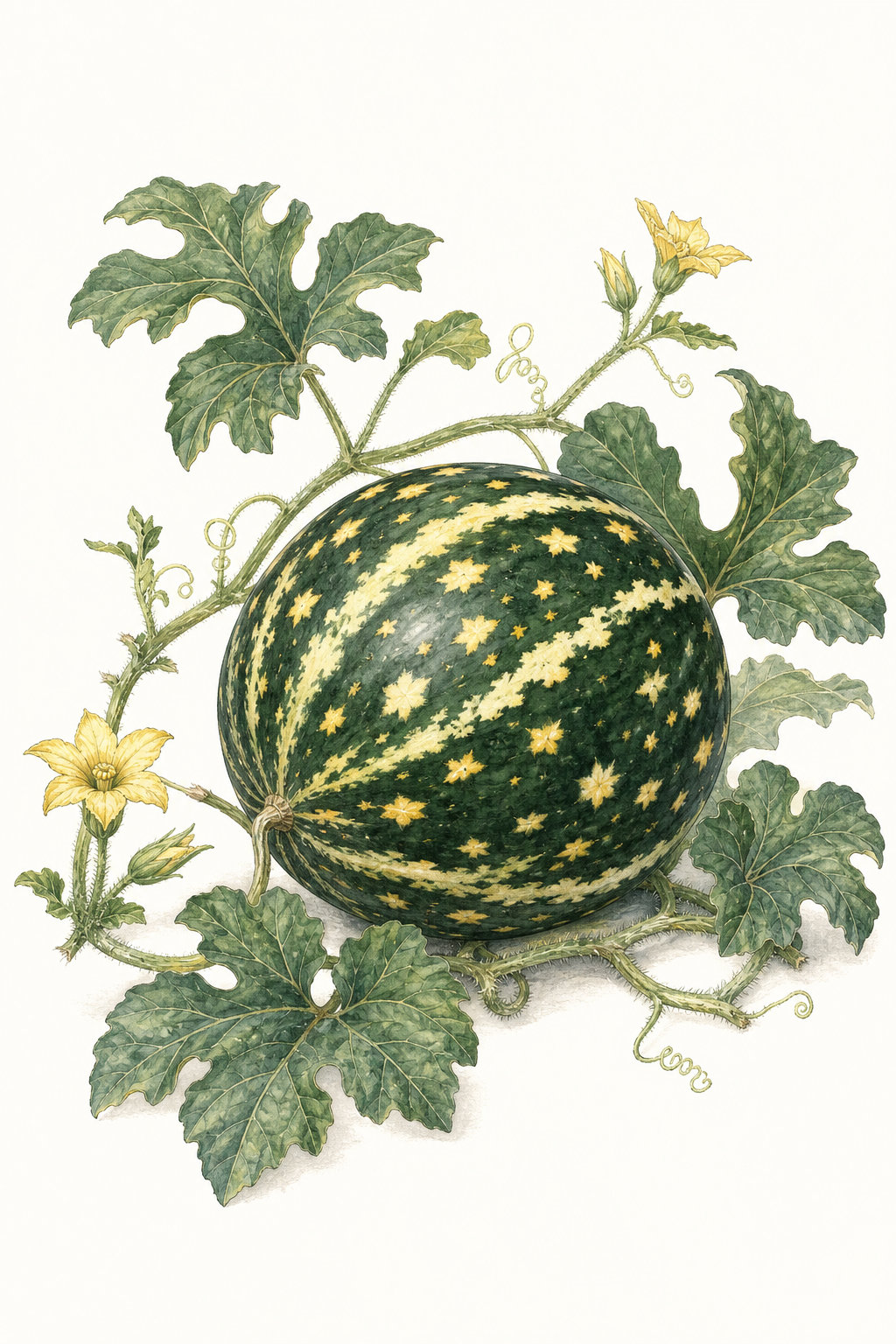
Sink your spoon into Moon And Stars (Yellow Flesh) for a sunlit surprise: crisp, honey-yellow flesh with a clean, refreshing swee…
Crop Dates
| Milestone | Date |
|---|---|
| Start Indoors | May 18th |
| Last Frost | May 4th |
| Transplant / Sow Outdoors | Jun 1st |
| Harvest Begins | Aug 25th |
| Harvest Ends | Oct 5th |
Crop Details
| Trait | Value |
|---|---|
| Days to Maturity | 85 |
| Sun Requirements | Full Sun |
| Growth Habit | Vine |
| Support Needed | Trellis |
| Planting Depth | Normal |
| Germination Temp (°F) | 75 |
| Min Soil Temp (°F) | 70 |
| Min Night Temp (°F) | 55 |
| Harden Off (days) | 12 |
Recommended Companions
Frequently Asked Questions
What pest or disease most commonly affects Citrullus lanatus (watermelon) in home gardens, and how can I prevent it?
How often should I water Citrullus lanatus during the main growing phase to keep the soil moisture right?
How do I tell when Citrullus lanatus (Moon And Stars watermelon) is ready to harvest?
Sink your spoon into Moon And Stars (Yellow Flesh) for a sunlit surprise: crisp, honey-yellow flesh with a clean, refreshing sweetness and a juicy, melt-in-the-mouth bite. The rind wears the classic picnic look—dark green with bright, starry spots and moonlike stripes—while the interior stays vividly golden for standout slices on the table. Grow it for long, satisfying summer harvests and for show-stopping presentation that tastes as good as it looks.
Sowing Tips

Transplant Conditions
Wait until soil reaches 70°F and nights stay above 55°F before moving outdoors. Harden off for 12 days first.

Direct Sow Preferred
Sensitive roots — does not transplant well. If starting indoors, use biodegradable pots and disturb roots as little as possible when moving outdoors.
Expert Note

Warm soil and minimal root disturbance are everything for watermelon—use black plastic/row cover to speed soil warming before transplanting.