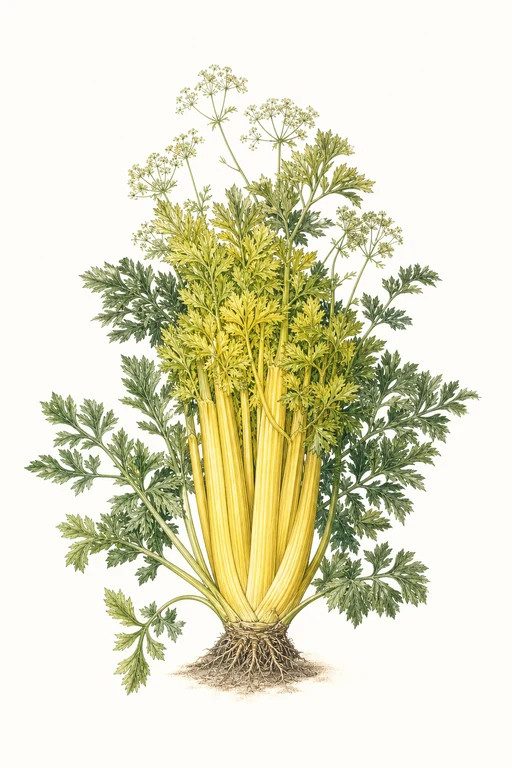
Golden Pascal
Celery
🌱 90d to harvest
Upright
Golden Pascal celery brings a luminous, mellow sweetness to the garden—crisp stalks with a tender snap and a clean, aromatic bite…
Crop Dates
| Milestone | Date |
|---|---|
| Start Indoors | Feb 14th |
| Last Frost | Apr 25th |
| Transplant / Sow Outdoors | Apr 18th |
| Harvest Begins | Jul 17th |
| Harvest Ends | Oct 16th |
Crop Details
| Trait | Value |
|---|---|
| Days to Maturity | 90 |
| Sun Requirements | Part Sun |
| Growth Habit | Upright |
| Support Needed | None |
| Planting Depth | Normal |
| Germination Temp (°F) | 70 |
| Min Soil Temp (°F) | 45 |
| Min Night Temp (°F) | 35 |
| Harden Off (days) | 7 |
Recommended Companions
Frequently Asked Questions
Golden Pascal (Apium graveolens var. dulce) — what pest or disease should I watch for and how do I control it?
Watch for celery leaf blight/cercospora leaf spot and damping-off-like seedling collapse, which show up as brown to gray speckling on leaves and can spread quickly in cool, wet weather. Keep airflow by spacing plants properly, water at the soil line (not on foliage), and remove badly spotted leaves early; if problems persist, switch to a labeled fungicide for celery/leaf blight and repeat per the label after cool, humid periods. Also check for aphids on new growth and rinse them off, then release or encourage beneficial insects if populations stay low.
How often should I water Golden Pascal during its main growing phase?
During the main growth phase (after seedlings establish), keep the soil consistently evenly moist—typically 1–2 inches (2.5–5 cm) of water per week total depending on heat and container size. Don’t let the soil dry out between waterings, because Apium graveolens can turn bitter and become tough if moisture swings; use mulch to steady moisture and water deeply when the top 1 inch (2.5 cm) of soil dries. Water in the morning so foliage surface dries quickly.
How can I tell when Golden Pascal is ready to harvest?
Harvest at about 90 days from sowing/transplanting window for your timing, when plants form full-size, crisp roots and tender, flavorful stalks. For a crisp eating quality, pick outer stalks first once they’re thick enough for use, then continue harvesting as the rest catch up. If you see stalks becoming stringy or very tall and loose, it’s past peak tenderness—start harvesting immediately.