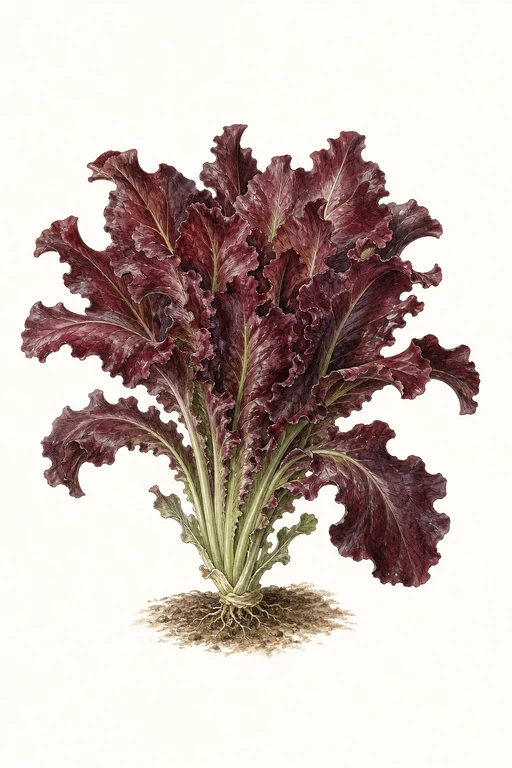
Merlot
50d to harvest
Sink into the velvety, wine-dark allure of Merlot lettuce—tender leaves with a deep burgundy sheen and a crisp, succulent bite. Its loose-leaf form builds a lush rosette of gently ruffled foliage, offering a refreshing, mildly sweet flavor that stays pleasantly crisp as it grows. Ideal for fresh salads and vibrant garnishes, Merlot also shines in quick tosses and leafy blends where color and texture matter most.
Crop Dates
| Milestone | Date |
|---|---|
| Start Indoors | Apr 4th |
| Last Frost | Apr 25th |
| Transplant / Sow Outdoors | Apr 25th |
| Harvest Begins | Jun 14th |
| Harvest Ends | Oct 16th |
Crop Details
| Trait | Value |
|---|---|
| Days to Maturity | 50 |
| Sun Requirements | Part Sun |
| Growth Habit | Rosette |
| Support Needed | None |
| Planting Depth | Normal |
| Germination Temp (°F) | 70 |
| Min Soil Temp (°F) | 40 |
| Min Night Temp (°F) | 35 |
| Harden Off (days) | 5 |
Recommended Companions
Frequently Asked Questions
What pest or disease commonly affects Lactuca sativa (Merlot lettuce), and how can I manage it?
Watch for downy mildew and leaf-spot diseases, which show up as yellow patches or dark spots that spread during cool, humid weather. Improve airflow with wider spacing, water at the base early in the day, and remove any infected outer leaves immediately. If problems persist, use a copper-based fungicide labeled for lettuce, following the label rate and reapplication interval.
How often should I water Lactuca sativa during its main growing phase to keep leaves crisp?
During the ~50-day growth period, keep the soil consistently evenly moist, not soggy—aim for a wet-but-drained bed with topsoil just slightly drying between waterings. In warm conditions, that’s often about 1 inch per week total (split into 2–3 waterings) while temperatures are high, then taper as weather cools. If leaves start tasting bitter or bolting begins, reduce drought stress quickly by maintaining steady moisture.