
Amarylla
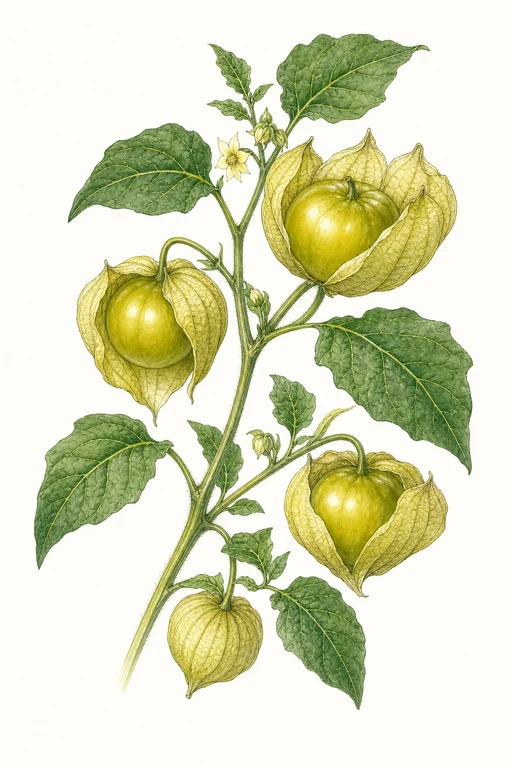
Aromatically bright and vividly tangy, Amarylla tomatillos ripen in 75 days to a crisp, juicy fruit cradled inside papery husks t…
Crop Dates
| Milestone | Date |
|---|---|
| Start Indoors | Feb 27th |
| Last Frost | Apr 10th |
| Transplant / Sow Outdoors | Jun 5th |
| Harvest Begins | Aug 19th |
| Harvest Ends | Oct 28th |
Crop Details
| Trait | Value |
|---|---|
| Days to Maturity | 75 |
| Sun Requirements | Full Sun |
| Growth Habit | Upright |
| Support Needed | Stake |
| Planting Depth | Normal |
| Germination Temp (°F) | 75 |
| Min Soil Temp (°F) | 60 |
| Min Night Temp (°F) | 50 |
| Harden Off (days) | 7 |
Recommended Companions


Frequently Asked Questions
What pest or disease commonly affects Physalis philadelphica (amarylla), and how can I control it?
How often should I water amarylla during the main growing phase, and what soil moisture level is ideal?
How do I tell when Physalis philadelphica (amarylla) is ready to harvest?
Aromatically bright and vividly tangy, Amarylla tomatillos ripen in 75 days to a crisp, juicy fruit cradled inside papery husks that turn from fresh green to warm, straw-kissed tones. The flesh is firm and seedy with a clean, citrusy bite—ideal for roasting until mellow and fragrant, then stirring into vibrant sauces or simmering into tangy preserves. Grow Amarylla for a steady harvest of jewel-like fruits that look as lively as they taste, perfect for gardeners who love bold, zesty flavor with a satisfying snap.
Sowing Tips

Transplant Conditions
Wait until soil reaches 60°F and nights stay above 50°F before moving outdoors. Harden off for 7 days first.
Expert Note

Grow tomatillos like warm-season tomatoes—transplant only after soil is reliably warm and plan to keep them evenly moist for the sweetest flavor.