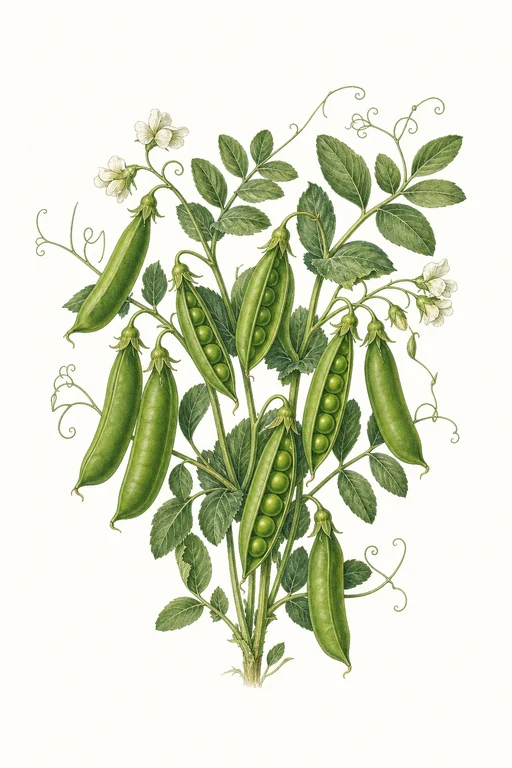
Multistar
🌱 70d to harvest
Upright
Sweet, garden-fresh peas in a velvet burst of color—Multistar delivers a steady harvest of plump, bright green shells with a tend…
Crop Dates
| Milestone | Date |
|---|---|
| Start Indoors | Direct Sow Anytime |
| Last Frost | Apr 10th |
| Transplant / Sow Outdoors | Apr 10th |
| Harvest Begins | Jun 19th |
| Harvest Ends | Oct 28th |
Crop Details
| Trait | Value |
|---|---|
| Days to Maturity | 70 |
| Sun Requirements | Full Sun |
| Growth Habit | Upright |
| Support Needed | Trellis |
| Planting Depth | Normal |
| Germination Temp (°F) | 45 |
| Min Soil Temp (°F) | 45 |
| Min Night Temp (°F) | 28 |
| Harden Off (days) | Not Required |
Recommended Companions
Frequently Asked Questions
What pest or disease is most likely on Pisum sativum (pea) and how can I manage it in a home garden?
Watch for powdery mildew and downy mildew on Pisum sativum, especially when days are warm and nights are humid. Remove affected leaves early and improve airflow by thinning plants and spacing rows; avoid overhead watering so foliage stays drier. If mildew is spreading, use a labeled fungicide for edible legumes and follow label timing to protect new growth.
How often should I water Pisum sativum during the main growing phase?
During active growth and pod fill, keep the soil consistently evenly moist but not waterlogged—aim for about 1 inch of water per week, split into 2–3 waterings if rainfall is low. Water at the base to wet the root zone, and let the top 1 inch of soil dry slightly between waterings to prevent root stress. Peas that dry out during flowering and pod development will set fewer pods.
How do I tell when Pisum sativum is ready to harvest?
Harvest Pisum sativum when pods are plump and peas inside are fully formed: snap varieties should feel crisp and fill the pod, while shelling types should look glossy and nearly uniform in size. Check plants starting around 70 days from sowing, and harvest every 1–2 days once pods begin producing because overmature pods turn starchy and reduce sweetness. If you can’t easily pierce a pea with your fingernail, it’s likely past peak.