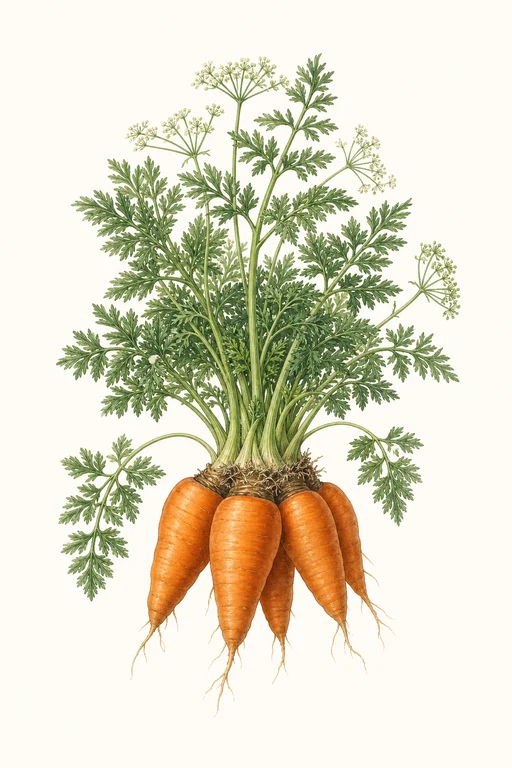
Carlo
Carrot
🌱 75d to harvest
Taproot
Sweetly fragrant at harvest, Carlo’s Chantenay roots develop a rich, warm orange core with a gently tapered shoulder and a smooth…
Crop Dates
| Milestone | Date |
|---|---|
| Start Indoors | Direct Sow |
| Last Frost | Apr 1st |
| Transplant / Sow Outdoors | Apr 1st |
| Harvest Begins | Jun 15th |
| Harvest Ends | Nov 5th |
Crop Details
| Trait | Value |
|---|---|
| Days to Maturity | 75 |
| Sun Requirements | Full Sun |
| Growth Habit | Taproot |
| Support Needed | None |
| Planting Depth | Normal |
| Germination Temp (°F) | 75 |
| Min Soil Temp (°F) | 40 |
| Min Night Temp (°F) | 28 |
| Harden Off (days) | Not Required |
Recommended Companions
Frequently Asked Questions
What pest or disease commonly affects Daucus carota var. sativus (Chantenay-type carrots like Carlo), and how do I control it?
Watch for carrot rust fly maggots, which cause tunnels and stunted, forked-looking roots. Cover beds with fine insect netting as soon as seedlings emerge, keep weeds down, and remove any badly infested roots to reduce the fly’s breeding sites. If you see leaf blight-like spotting or fungal leaf disease in humid weather, thin for airflow and avoid overhead watering.
How often should I water during the main growing phase of Daucus carota var. sativus, and what soil moisture level should I maintain?
During root bulking, keep the soil consistently moist but not waterlogged—aim for even moisture so roots don’t split or fork. For most home gardens, water deeply about 1–2 times per week, then adjust to rainfall and heat so the top few inches stay evenly damp. Stop light surface watering and instead water thoroughly after drying slightly to push moisture deeper for straight root growth.
How can I tell when Carlo (Daucus carota var. sativus) is ready to harvest?
Start checking around day 70–75: gently brush soil aside and look for the shoulder of the carrot reaching its expected red core size, typically showing a well-formed top near the surface. Harvest when roots are firm and brightly colored; if you wait too long, they can become woody and less sweet. Loosen soil with a fork before pulling to avoid snapping short, dense Chantenay roots.