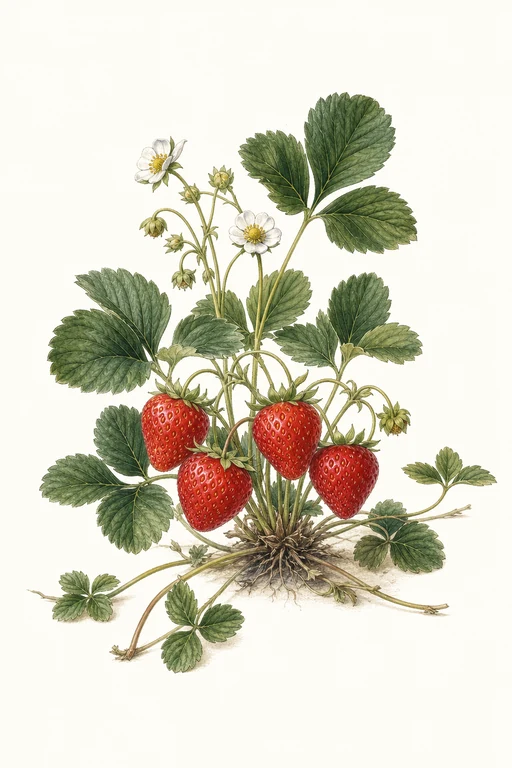
Honeoye
🌱 90d to harvest
Spreading
Sweetly perfumed berries lead the way with Honeoye’s classic strawberry fragrance and a bright, glossy red glow. At peak ripeness…
Crop Dates
| Milestone | Date |
|---|---|
| Start Indoors | Direct Sow Anytime |
| Last Frost | Apr 1st |
| Transplant / Sow Outdoors | Apr 1st |
| Harvest Begins | Jun 30th |
| Harvest Ends | Nov 5th |
Crop Details
| Trait | Value |
|---|---|
| Days to Maturity | 90 |
| Sun Requirements | Full Sun |
| Growth Habit | Spreading |
| Support Needed | None |
| Planting Depth | Normal |
| Germination Temp (°F) | 70 |
| Min Soil Temp (°F) | 50 |
| Min Night Temp (°F) | 28 |
| Harden Off (days) | Not Required |
Recommended Companions
Frequently Asked Questions
What’s the most common disease issue for Honeoye strawberry (Fragaria × ananassa), and how do I control it?
In home gardens, gray mold (Botrytis) is a frequent problem, especially when fruit stays wet from rain or overhead watering. Remove and dispose of spoiled berries promptly, keep mulch around plants to reduce fruit contact with soil, and water at the base early in the day to keep foliage drier. If you see repeated outbreaks, thin leaves for airflow and consider a labeled fungicide for strawberries at first signs of gray mold.
How often should I water Honeoye strawberries during peak fruiting, and what soil moisture target should I keep?
During fruit set and fruiting (roughly mid-season through harvest), keep soil consistently moist but not waterlogged—about 1 inch of water per week from rain and irrigation combined. Water deeply when the top 1 inch of soil starts to dry, aiming to wet the root zone rather than just the surface. Avoid frequent light watering that keeps the crown wet; it increases risk of rot and fungal problems in Fragaria × ananassa.
How can I tell when Honeoye strawberries are ready to harvest?
Pick Honeoye when berries are fully red from the shoulders to the tip—if you still see white or pale areas, leave them to ripen for a day or two. Harvest in the morning when temperatures are cooler, and gently pull berries (or snip the stem) without tugging. They’re best when they’re firm, fragrant, and come off easily; overly soft berries will be prone to bruising and gray mold.