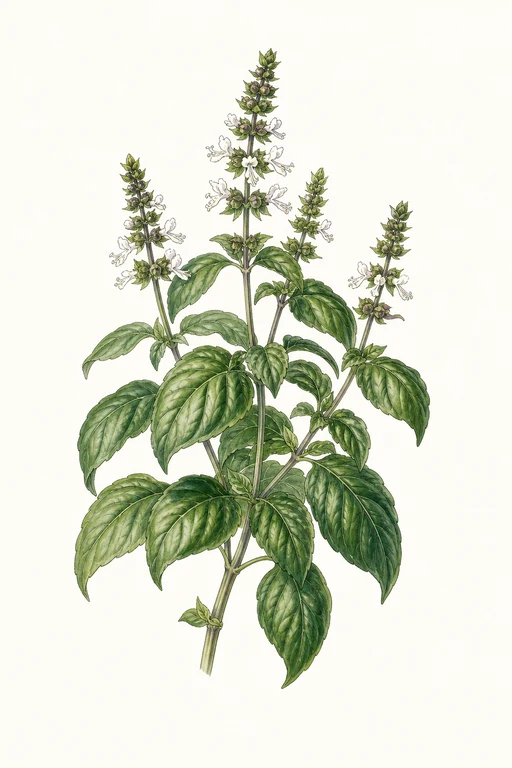
Queen Of Sheba Basil
Basil
🌱 50d to harvest
Upright
Fragrant as warm sun on green velvet, Queen Of Sheba Basil unfurls with an intense, sweet-anise aroma and a clean, bright flavor …
Crop Dates
| Milestone | Date |
|---|---|
| Start Indoors | Feb 9th |
| Last Frost | Mar 23rd |
| Transplant / Sow Outdoors | May 4th |
| Harvest Begins | Jun 23rd |
| Harvest Ends | Nov 12th |
Crop Details
| Trait | Value |
|---|---|
| Days to Maturity | 50 |
| Sun Requirements | Full Sun |
| Growth Habit | Upright |
| Support Needed | None |
| Planting Depth | Normal |
| Germination Temp (°F) | 70 |
| Min Soil Temp (°F) | 60 |
| Min Night Temp (°F) | 50 |
| Harden Off (days) | 10 |
Recommended Companions
Frequently Asked Questions
What pest or disease most commonly affects Ocimum basilicum (Queen of Sheba basil), and how can I stop it?
Basil is commonly hit by downy mildew (often yellow patches on top with gray/purple growth underneath leaves), especially in cool, humid conditions. Remove and discard affected leaves immediately, improve airflow by spacing plants, and water at the soil line (not over the foliage). If it keeps spreading, use a labeled fungicide for basil/downy mildew and avoid saving seed from infected plants.
How often should I water Ocimum basilicum during the main growing phase?
During active growth (roughly weeks 2–6), keep the soil consistently evenly moist but not soggy—aim for top 1 inch of soil to dry slightly before watering again. In hot weather, this often means watering every 2–3 days, while cooler periods may require less frequent watering. Make sure containers drain well; basil in waterlogged soil develops root stress and becomes more disease-prone.
How do I know when Queen of Sheba basil is ready to harvest?
Harvest when plants are well-established and reach about 8–12 inches tall, typically around 50 days from sowing, and before flowering starts for the best leaf flavor. Take pinch/harvest by removing the top growing tips plus the top pair of leaves, which encourages branching. If you see flower buds forming, harvest sooner and more frequently to delay flowering.