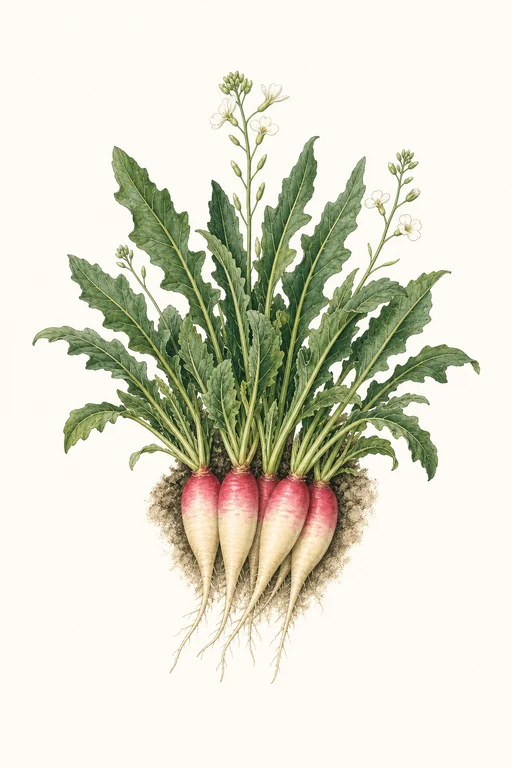
French Breakfast
25d to harvest
Crisp as fresh-cut glass, French Breakfast Radish delivers a bright, peppery snap that turns pleasantly sweet as it ripens. Its blushing white shoulders fade into rosy-red tops, with a tender, juicy interior that stays crisp even at peak size. Ideal for early-season sowings, it shines in fresh salads, on platters, and as a quick-pickling favorite for adding color and zing to any garden harvest.
Crop Dates
| Milestone | Date |
|---|---|
| Start Indoors | Direct Sow |
| Last Frost | Mar 6th |
| Transplant / Sow Outdoors | Mar 6th |
| Harvest Begins | Mar 31st |
| Harvest Ends | Nov 26th |
Crop Details
| Trait | Value |
|---|---|
| Days to Maturity | 25 |
| Sun Requirements | Full Sun |
| Growth Habit | Taproot |
| Support Needed | None |
| Planting Depth | Normal |
| Germination Temp (°F) | 55 |
| Min Soil Temp (°F) | 40 |
| Min Night Temp (°F) | 32 |
| Harden Off (days) | Not Required |
Recommended Companions
Frequently Asked Questions
What’s a common problem on French Breakfast radish (Raphanus sativus) and how do I control it at home?
A frequent issue is flea beetle feeding, which shows up as tiny holes in leaves and can stunt growth fast in warm weather. Cover young plants with a fine row cover until they’re well established, and apply insecticidal soap to affected foliage in the evening, repeating every 5–7 days as needed. If plants become badly damaged, thin to ensure airflow and resow for the next batch instead of trying to “save” heavily holed seedlings.
How often should I water French Breakfast radish during the main growing phase?
Keep the soil consistently evenly moist from sowing through bulbing, especially because radishes can turn pithy if they dry out. Water when the top 1 inch of soil feels dry, typically about 1 inch per week total in cool weather, split into 2–3 lighter waterings if temperatures rise. Avoid waterlogging—soggy soil encourages rot and makes roots split or stay small.