
Adirondack Red
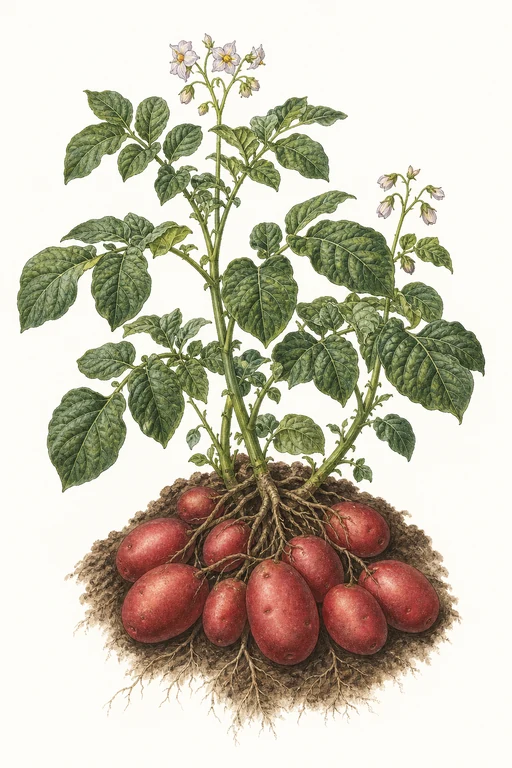
Velvety-skinned and richly colored, Adirondack Red brings a dramatic blush to the garden—russet-red exteriors with a smooth, slightly waxy sheen and creamy, pale flesh beneath.
Its texture is satisfyingly firm yet tender when cooked, making it a standout specialty potato for roasting, mashing, and hearty skillet preparations, as well as for golden-brown wedges and rustic sides. Grow Adirondack Red for a dependable 90-day harvest and the kind of color that turns every basket into a centerpiece.
Light: Full SunMaturity: 90 DaysHabit: Upright
Crop Dates : 2a
| Milestone | Date |
|---|---|
| Start Indoors | Direct Sow |
| Last Frost | May 25th |
| Transplant / Sow Outdoors | May 25th |
| Harvest Begins | Aug 23rd |
| Harvest Ends | Aug 29th |
Crop Details
| Trait | Value |
|---|---|
| Days to Maturity | 90 |
| Sun Requirements | Full Sun |
| Growth Habit | Upright |
| Support Needed | None |
| Planting Depth | Normal |
| Germination Temp (°F) | 50 |
| Min Soil Temp (°F) | 45 |
| Min Night Temp (°F) | 35 |
| Harden Off (days) | Not Required |
Culinary Notes

Chef's Note
Adirondack Red cooks up with a creamy center but keeps a confident, tender structure—great for browning jobs where you want crust plus softness, not mush. The russet-red skins and waxy sheen make it especially reliable for roasted wedges and smooth mashes that hold their texture under hot handling.

Best Uses
- hot, dry roasting where the skin turns crisp and the centers stay creamy
- thick mashes or potato purée that whip up smooth without getting gluey
- rustic wedges and skillet browns aiming for shatter on the outside
- braised or stewed dishes where it holds shape through simmering

Flavor Profile

Frequently Asked Questions
What pest or disease problem commonly affects Solanum tuberosum (potatoes) like Adirondack Red, and how do I manage it?
How often should I water Solanum tuberosum during the main growing phase, and what soil moisture level should I aim for?
How can I tell when Adirondack Red (Solanum tuberosum) is ready to harvest?
Sowing Tips

Transplant Conditions
Wait until soil reaches 45°F and nights stay above 35°F before moving outdoors.
Expert Note

Plant certified seed potatoes in loose, well-drained soil and hill as plants grow to keep tubers covered for best color and yields.