
Blues
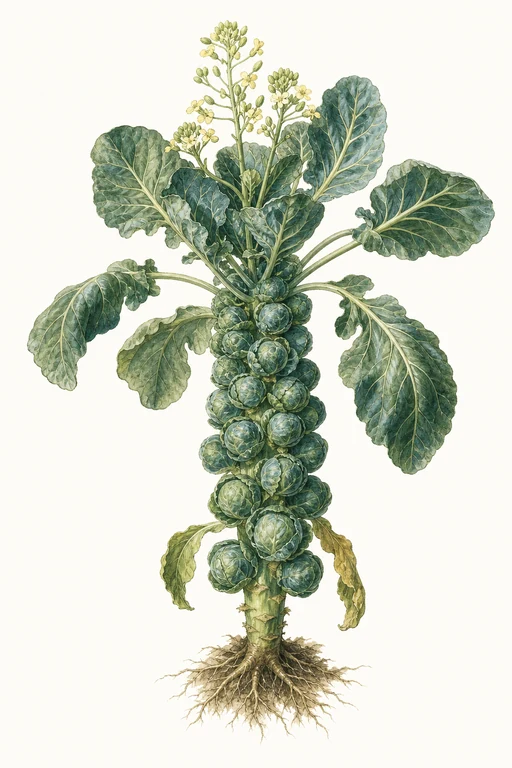
Sweetly nutty and vividly tender, Blues Brussels Sprouts form tight, jewel-like heads with a cool, blue-green sheen that feels almost velvety to the eye and palate.
Expect a crisp, fine-grained texture that holds its charm whether you’re roasting for caramelized edges, steaming for a gentle sweetness, or shredding into fresh salads and slaws. Blues reaches maturity in about 60 days, delivering a dependable harvest along the sturdy stalk for a garden-to-table showcase.
Light: Full SunMaturity: 60 DaysHabit: Rosette
Planting schedules and alerts are optimized for Columbus (Zone 6b).
Crop Dates
| Milestone | Date |
|---|---|
| Start Indoors | Mar 28th |
| Last Frost | Apr 25th |
| Transplant / Sow Outdoors | Apr 25th |
| Harvest Begins | Jun 24th |
| Harvest Ends | Oct 16th |
Crop Details
| Trait | Value |
|---|---|
| Days to Maturity | 60 |
| Sun Requirements | Full Sun |
| Growth Habit | Rosette |
| Support Needed | None |
| Planting Depth | Normal |
| Germination Temp (°F) | 45 |
| Min Soil Temp (°F) | 40 |
| Min Night Temp (°F) | 32 |
| Harden Off (days) | 6 |
Culinary Notes

Chef's Note
These Brussels sprouts lean sweet-nutty with a crisp, fine-grained crunch that stays elegant rather than turning stringy. Roast them hard for caramelized edges, then hit them with lemon or mustard so the sweetness snaps instead of clinging.

Best Uses
- roasting on high heat for browned, candy-like edges
- steaming just until tender for a gentle sweet profile
- shredding into slaw to keep the heads snappy
- pan-sautéing with butter and a splash of stock for glossy coating

Flavor Profile

Frequently Asked Questions
Why are my blueberries getting pale leaves with dark spots and what should I do?
How often should I water blueberries during the main growing phase (first ~8 weeks after planting)?
How can I tell when blueberries are ready to harvest at about 60 days?
Sowing Tips

Transplant Conditions
Wait until soil reaches 40°F and nights stay above 32°F before moving outdoors. Harden off for 6 days first.
Expert Note

For fastest tight heads with Blues Napa, transplant into consistently cool weather and avoid nitrogen overfeeding late in development.