
Dagan
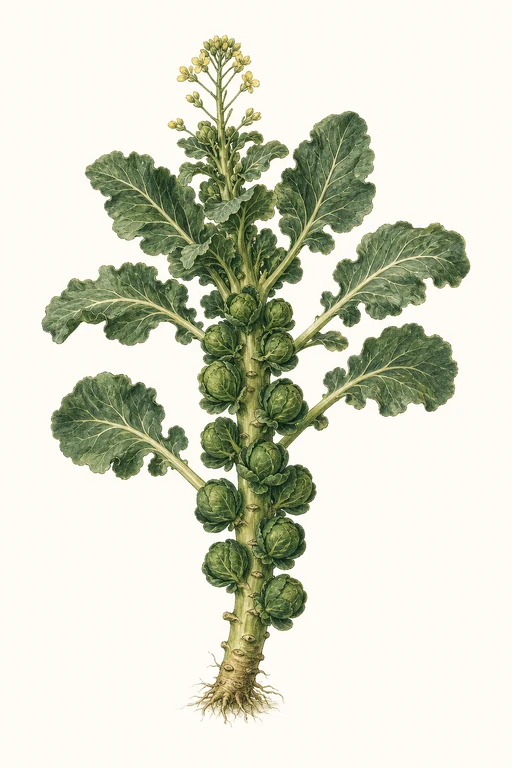
Sweetly nutty and beautifully tender, Dagan Brussels sprouts develop a dense, velvety bite with a rich, green depth that feels almost buttery when roasted.
Each compact crown forms along a sturdy central stalk, offering uniform, harvest-ready florets that hold their flavor with confidence from garden to pan. Grow Dagan for reliable, full-season performance and a standout centerpiece of cool-weather abundance—ideal for roasting, steaming, and turning into glossy sauces or tangy pickles.
Light: Full SunMaturity: 78 DaysHabit: Upright
Planting schedules and alerts are optimized for Columbus (Zone 6b).
Crop Dates
| Milestone | Date |
|---|---|
| Start Indoors | Mar 28th |
| Last Frost | Apr 25th |
| Transplant / Sow Outdoors | Apr 25th |
| Harvest Begins | Jul 12th |
| Harvest Ends | Oct 16th |
Crop Details
| Trait | Value |
|---|---|
| Days to Maturity | 78 |
| Sun Requirements | Full Sun |
| Growth Habit | Upright |
| Support Needed | None |
| Planting Depth | Normal |
| Germination Temp (°F) | 45 |
| Min Soil Temp (°F) | 40 |
| Min Night Temp (°F) | 30 |
| Harden Off (days) | 6 |
Culinary Notes

Chef's Note
Dagan’s florets roast up with a buttery-feeling interior and a nutty, green sweetness that doesn’t turn bitter when you push the heat. It’s built for pan confidence—sear hard, finish hot, and let the cabbage depth play nice with fat, acid, and something salty.

Best Uses
- high-heat roast until edges bronze and interiors go plush
- steam then glaze with butter or browned fat for a glossy, tender crown
- shave or halve and sauté for a fast, caramelizing side without toughening
- quick pickle for tangy, crunchy-sweet snacking

Flavor Profile

Frequently Asked Questions
What pest or disease most commonly affects Brussels sprouts (Brassica oleracea var. gemmifera), and how can I control it?
How often should I water Brussels sprouts during the main growing phase, and what soil moisture level should I keep?
How do I tell when Brussels sprouts are ready to harvest?
Sowing Tips

Transplant Conditions
Wait until soil reaches 40°F and nights stay above 30°F before moving outdoors. Harden off for 6 days first.
Expert Note

For best uniform heads, keep seedlings cool and transplant on or just after last frost, then maintain even moisture to prevent loose or stressed sprouts.